Centennial Garage Coatings
A Centennial garage takes magnesium chloride off the road all winter, freeze-thaw cycling through spring, and high-altitude sun through the door in summer. Those are three different attacks on one slab, and a hardware store kit survives none of them.
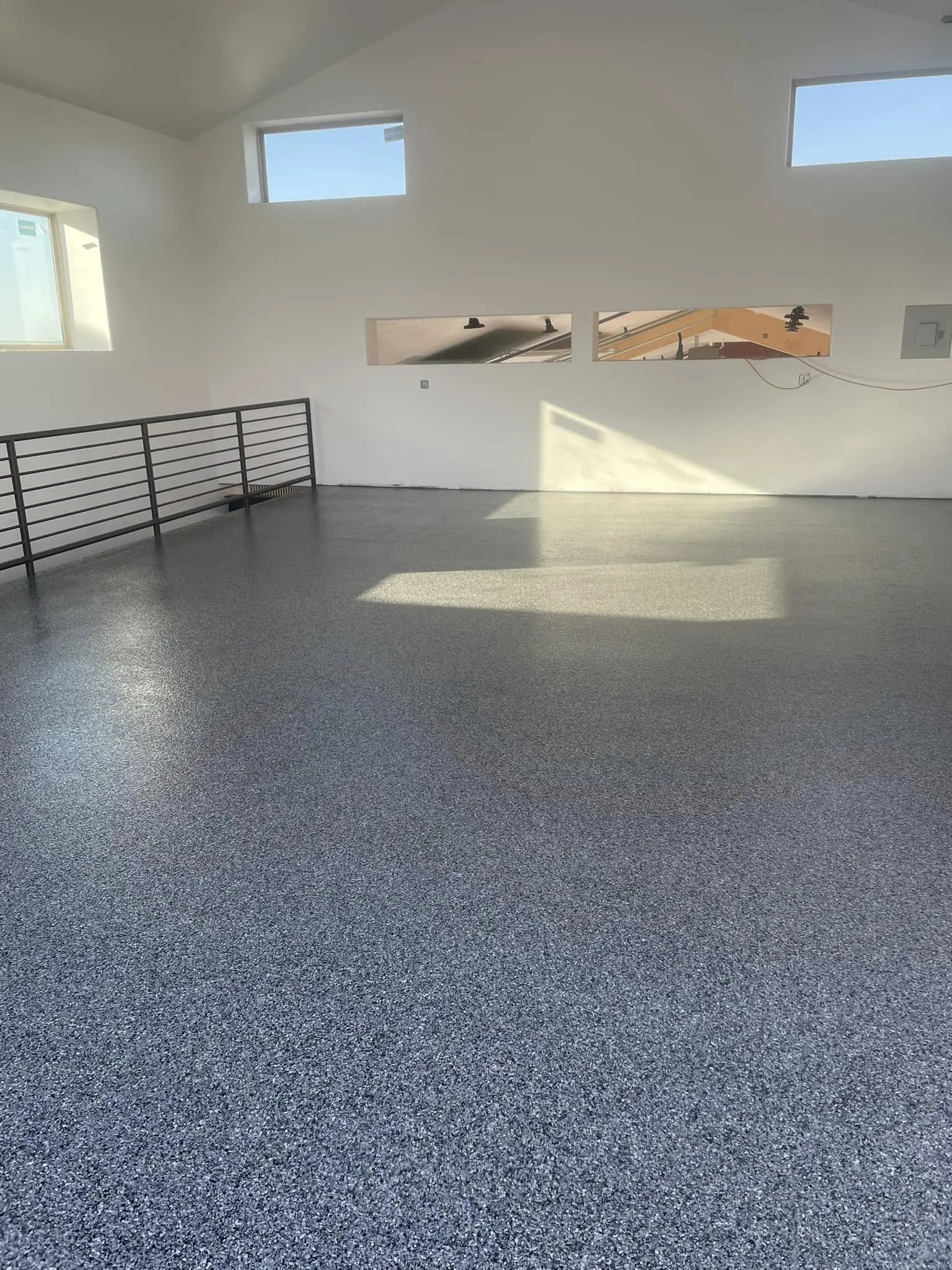
What Colorado winters actually do to a garage slab
The Front Range runs a genuine freeze-thaw cycle, and it is harder on concrete than a colder, steadier climate would be. Water works into a hairline crack or a porous surface, freezes overnight, expands and opens the gap slightly. It thaws in the afternoon sun, more water gets deeper, and it freezes again. Repeat that through a Centennial winter and a crack you could barely see in October is a real one by April.
What makes it worse here is what CDOT and the county put on the roads. Magnesium chloride is more effective than rock salt at low temperatures, which is why it is used across the metro, and it is also more aggressive on concrete. It draws moisture, stays wet longer than salt does, and it comes home on your tires every day from November through March.
On an uncoated garage floor the result is spalling: the top surface flaking away in patches, starting where the tires park and spreading outward. Once it starts it accelerates, and past a certain point the floor needs rebuilding rather than coating. Coating before that starts is considerably cheaper than coating after.
What a Centennial garage floor has to handle
Magnesium chloride
More aggressive than rock salt and it stays wet longer. It concentrates exactly where the wheels sit, which is why that is the first area to fail on an uncoated slab.
Freeze-thaw cycling
Water in the pores expands every night and relaxes every afternoon. A sealed surface stops water getting in, which is what breaks the cycle.
Hot tire pickup
Even at altitude, a tire off I-25 in July comes home far hotter than the slab and lifts a weak coating away. The topcoat is what resists that.
Altitude UV
Sun through an open garage door is stronger here than at sea level. Anything exposed gets a UV-stable topcoat so it does not amber.
How the job runs
The first day is grinding. Diamond tooling takes the surface down past chloride contamination, oil, tire marks and any previous coating, leaving open concrete with a consistent profile for the primer to key into. Acid etching does very little on a chloride-loaded Colorado slab and it is what cheap quotes substitute for real prep.
Cracks and spalled areas get rebuilt with rigid patching compound while the slab is open. Anything left flexible telegraphs through the finish and reopens with the next freeze cycle, so this is not a step to economize on in this climate.
Spalling starts where the tires park. That is not coincidence, it is magnesium chloride, and it is why a Colorado garage needs grinding rather than a wash and a roller.
Then primer, a full broadcast of flake to refusal so no base coat shows, the excess scraped back, and two clear topcoats. Full refusal matters because a thin scatter of chip leaves base coat exposed between the pieces, and on a floor that sees grit and chloride that is where wear starts.
Two to three working days, foot traffic the next day, vehicles after about seventy-two hours. Cold slows cure, so a January install genuinely takes longer than a June one and we schedule honestly rather than promising a date the temperature will not support. Every job carries our lifetime warranty.
One detail specific to this housing stock: a lot of Centennial garages open directly into finished living space, and that changes two things. The floor gets seen from inside the house, so the color choice matters more than in a detached bay, and the door threshold is where snowmelt collects and sits. We terminate the coating properly at that threshold rather than running it to the edge and stopping, because that junction is where a poorly finished floor starts lifting first.
Most Centennial garages get a flake system, and where the bay is a showpiece people look at metallic. Where a fast turnaround matters, polyaspartic cures in cold that stops epoxy. Full detail on the main garage coatings page. We serve Centennial and Arapahoe County.
Centennial Garage Coatings FAQ
Will it stop the magnesium chloride damage?
It seals the concrete so the chloride cannot get into the pores, which is what causes spalling. The chloride then sits on the surface where it rinses off. Giving the wheel tracks an occasional rinse mid-winter helps and is not essential. What does not survive a Front Range winter is a thin water-based kit, which is what most of the spalled garages we replace had on them.
My floor is already flaking where I park. Is it too late?
Usually not, but it is repair before coating. Those spalled areas get cut back to sound concrete and rebuilt, then the whole floor is treated as one. That costs more than a straightforward garage and it is the honest price. Coating over failing concrete hides it for a season and then comes away taking your money with it.
Can you install in winter?
Yes, with the right system. Standard epoxy effectively stops curing below a certain slab temperature, so a January garage either needs heat brought in or a polyaspartic system that cures cold. We will tell you which applies to your bay rather than booking a January date and hoping.
How long before I can park on it?
Foot traffic the next day, vehicles after about seventy-two hours in normal conditions. Cold stretches that, sometimes considerably. We would rather tell you four days in February and have you back early than promise three and be wrong.
Is flake worth it over a solid color?
In a Colorado garage, nearly always. The chip adds thickness that resists grit and chloride, gives grip when a car comes in covered in snowmelt, and hides the marks a solid color shows constantly. It also means a repair blends into the pattern instead of showing as a patch.
What does the lifetime warranty actually cover?
The bond and the system on residential interior floors. It is a warranty we can offer because we grind properly and read the slab first rather than hoping, and it is worth asking any other quote you get whether theirs covers delamination or only material defects, because those are very different promises.
Get your Centennial garage quoted
Tell us the size of the bay, whether the floor has started flaking anywhere, and what else the room gets used for. We read the slab before anything is priced.
Finished floors are in the gallery, or send us the details.