Arvada Polished Concrete
Polishing is a mechanical process, not a coating. We grind, densify, and refine the slab that is already under your feet, which means the floor you end up with was largely decided by whoever poured the concrete and by whatever has happened to it since. That makes polished concrete the one product we sometimes talk an Arvada owner out of. When the slab is right, nothing else looks like it, and it keeps looking like that for decades with a mop and a little discipline.
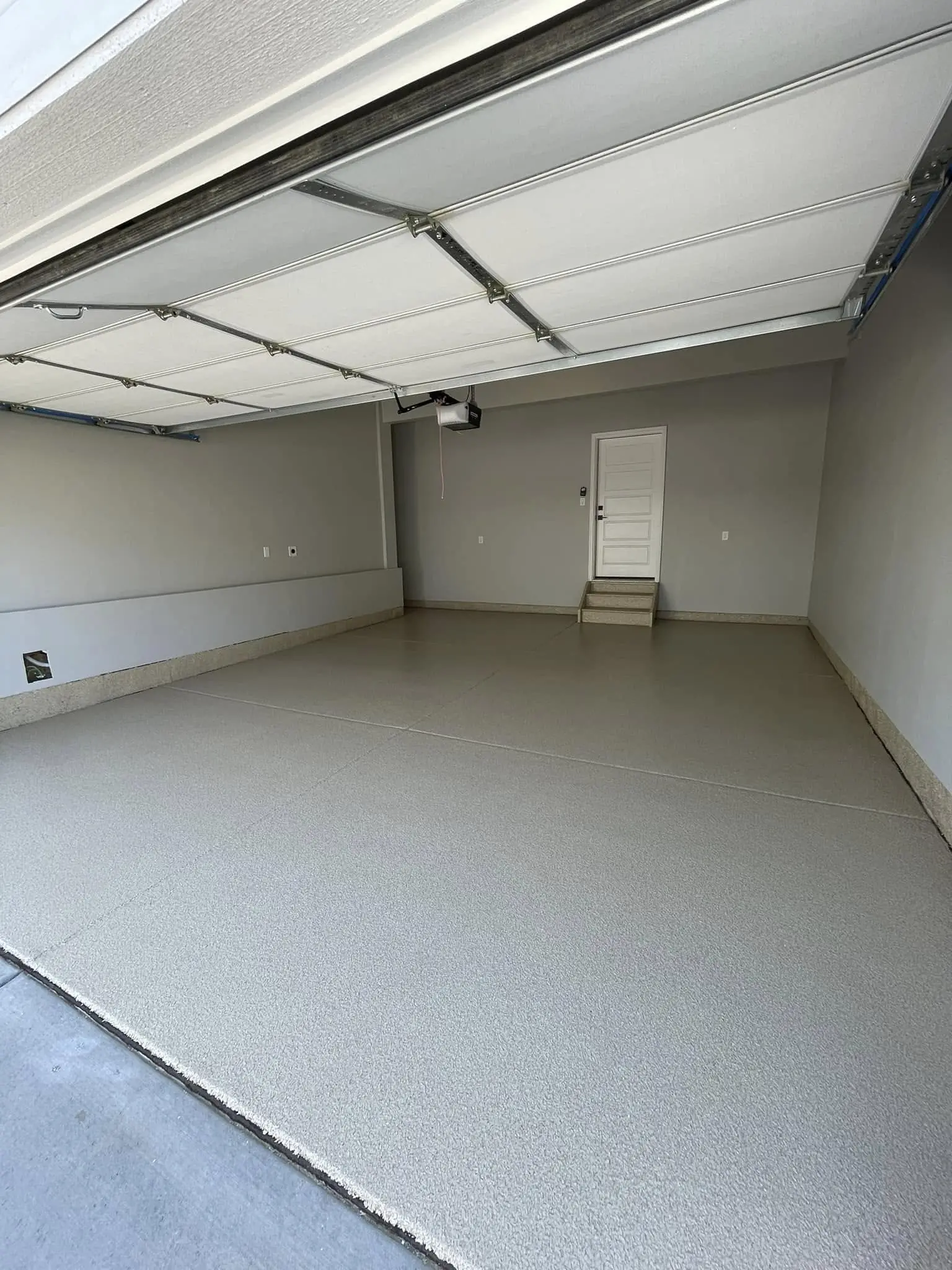
Polishing Works With the Slab, Never Over It
A coating hides concrete. Polishing puts it on display. Every trowel burn, cold joint, patch, and hairline crack in an Arvada slab is still there when we finish, only now it sits under a hard, reflective surface that pulls the eye straight to it. A good share of our job on a polishing walkthrough is telling you which of those marks will read as character and which ones will read as damage.
The variables that decide the outcome are hardness, flatness, and what the pour looks like below the surface. A soft slab grinds slowly and never tightens the way a hard one does. A wavy slab can be flattened, but that costs passes and cuts deeper through the high spots, which shifts the look across the room.
Sometimes the answer is no. Heavy spalling, a thick bed of soft patch material, or moisture pushing up from below will not reward the grinding, and we would rather say that on the first visit than take the work and hand back a blotchy floor. In those rooms a coating is the better product, and we will tell you so before anybody talks about a quote.
Cream, Salt and Pepper, or Full Aggregate
How deep we cut decides how much stone shows, and that choice does more to the finished look than sheen. We settle it with you standing over a test patch on your own floor, never over a brochure.
This is where an Olde Town building surprises everyone. An owner pictures a rich bed of river rock under the old tile, and what is down there may be a thin topping over an older floor, or a slab batched with small pale aggregate that will never give them that picture. We cut a test window before anyone commits, because the concrete gets the final vote.
Grind Level and Sheen Follow the Room
Sheen is a separate decision from cut depth, and it should follow how the floor gets used and how it gets lit. A brewery taproom with afternoon glass will throw glare off a high polish and show every mop streak by dinner service. That same taproom under warm pendants carries gloss beautifully.
A retail floor usually wants the reflection, because bounced light makes a small Olde Town storefront feel larger and makes product read better on the shelf. A warehouse aisle wants the opposite. A lower sheen hides tire marks, stops fighting the overhead fixtures, and takes a scrubber without showing swirl.
So we walk the room at the hour it is busiest, watch where the light lands, and pick from that. Then we polish a sample area at two adjacent levels and let you stand on both.
What an Older Olde Town Slab Is Hiding
Tile mastic is the usual first find. Decades of cutback adhesive under vinyl tile does not disappear on the first pass. It smears, it loads the diamonds, and it has to be ground out with the right tooling before anything else happens. Carpet glue behaves the same way. Neither one kills a polish, but both change the schedule.
Then there are the trenches. Any building that has had plumbing or electrical rerun carries a patched channel through the slab, and patch material almost never matches the parent concrete in hardness or in color. Polished, that stripe is visible. Saw cuts and cold joints are the same story: honest lines in a floor rather than defects, though they hold a shadow, so we point out every one before we start.
Old paint, forklift stripes, and layered sealer all come off, and what is underneath is often the best news of the day. Slabs in Arvada’s older commercial buildings have had fifty years to cure, and they frequently grind harder and tighter than something poured last spring.
Thinking about polishing an Arvada floor?
We cut a test patch, show you what the slab can actually reach, and say plainly if a coating would serve the room better.
Densifier, Joint Fill, and Warehouse Traffic
Densifier is the step that separates polishing from sanding. The liquid soaks into the open pores and reacts with free lime in the concrete to form new hard material inside the surface. That reaction is what lets the finer passes build reflectivity instead of chasing dust, and it is what keeps the floor from powdering under traffic a year later.
In the light industrial buildings along Ralston Road and out toward the north end of town, joints matter more than sheen. A hard wheeled forklift crossing an open control joint hammers both edges on every pass, and once an edge begins to break down it keeps going. Filling those joints with a semi rigid filler that supports the edge, then shaving it flush during polishing, is the difference between a warehouse floor that holds up and one that needs joint repair in a few seasons. We fill after the slab has done most of its shrinking, and we flag the joints that have to stay free to move.
Basements, Dust, and Opening in the Morning
Arvada has a lot of finished basements, and polished concrete is a real option down there. It stays cool underfoot, it cannot delaminate because nothing is bonded on top of it, and it shrugs off a dog. The honest tradeoffs: a basement slab was rarely troweled to the standard a main floor gets, so a cream finish is a gamble, and if the room needs a specific color, a flake or metallic system gives you control that grinding simply cannot.
Grinding makes dust. We run the work wet or on vacuum with containment across the openings, plus negative air where people are still using the space. For a shop or a taproom that has to open in the morning, we phase it: half the floor at a time behind a barrier, passes scheduled around your hours, and the final step timed so nobody walks it green.
Arvada Polished Concrete Questions
Can you tell what my floor will look like before we commit?
Not from a photo, and not from looking at the surface. We cut a test patch in an out of the way corner, take it to two or three cut depths, and polish it out. That patch is the honest preview of your slab, and it takes a couple of hours.
When do you tell somebody not to polish?
Heavy spalling, a soft slab that will not take a densifier, thick soft patch material across a large area, or moisture coming up from underneath. Any of those and we point you toward a coating instead. We would rather lose the job than hand back a floor that looks blotchy under the lights.
What usually turns up under an old Olde Town floor?
Tile mastic and carpet glue, patched trenches where plumbing or electrical was rerun, saw cuts, cold joints, and layers of old sealer. Most of it grinds off, but the patched trenches and joints stay visible in the finished floor, so we walk them with you before the first pass.
Do the control joints have to be filled?
In a warehouse, or anywhere hard wheels cross them, yes. An unfilled joint edge takes a beating from forklift traffic and starts to break down. We use a semi rigid filler that supports the edge and shave it flush during polishing. In a quiet residential room, filling is often optional.
Can we stay open while you work?
Usually. We phase the floor in sections behind containment, run the grinders wet or on vacuum, and build the passes around your hours. Tell us your open time on the walkthrough and we sequence the work backward from it.
Polished concrete or a coating in a finished basement?
Polishing wins when you want the concrete itself and the lowest possible upkeep. A coating wins when you want a specific color, a warmer surface, or when the basement slab was never troweled well enough to polish evenly. After the test patch we will tell you which one your slab is.
More Arvada Floor Work
View all Arvada, CO services · See our work · Elevate My Floor
Where We Polish Around Arvada
We polish concrete across Arvada, from the brick storefronts and taprooms around Olde Town to the shops and warehouses off Ralston Road, plus homes and basements in Arvada Ridge, Lake Arbor, Leyden Rock, and Candelas. See the rest of our Jefferson County coverage or the full service areas list.