Arvada Metallic Epoxy
Metallic epoxy is a design decision before it is a floor. Pigment travels through the wet resin during the pour, so the finished surface carries depth and motion that a roller cannot fake. It is also loud. A floor that pulls the eye belongs in some Arvada rooms and works against you in others. We pour metallic across Arvada and northwest Jefferson County, and we will say so plainly when a room would be better off with something quieter.
Where a Metallic Floor Earns Its Room
Metallic is the loudest surface we install. Everything else in the room has to agree to sit behind it: the cabinets, the wall color, the lighting, the furniture you already own. In a room built around the floor that is exactly the point. In a room that already has a lot going on, the floor and the room argue. So before we talk finishes we ask what else lives in that space and how the light moves through it during the day.
These three rooms are where metallic keeps paying for itself in Arvada:
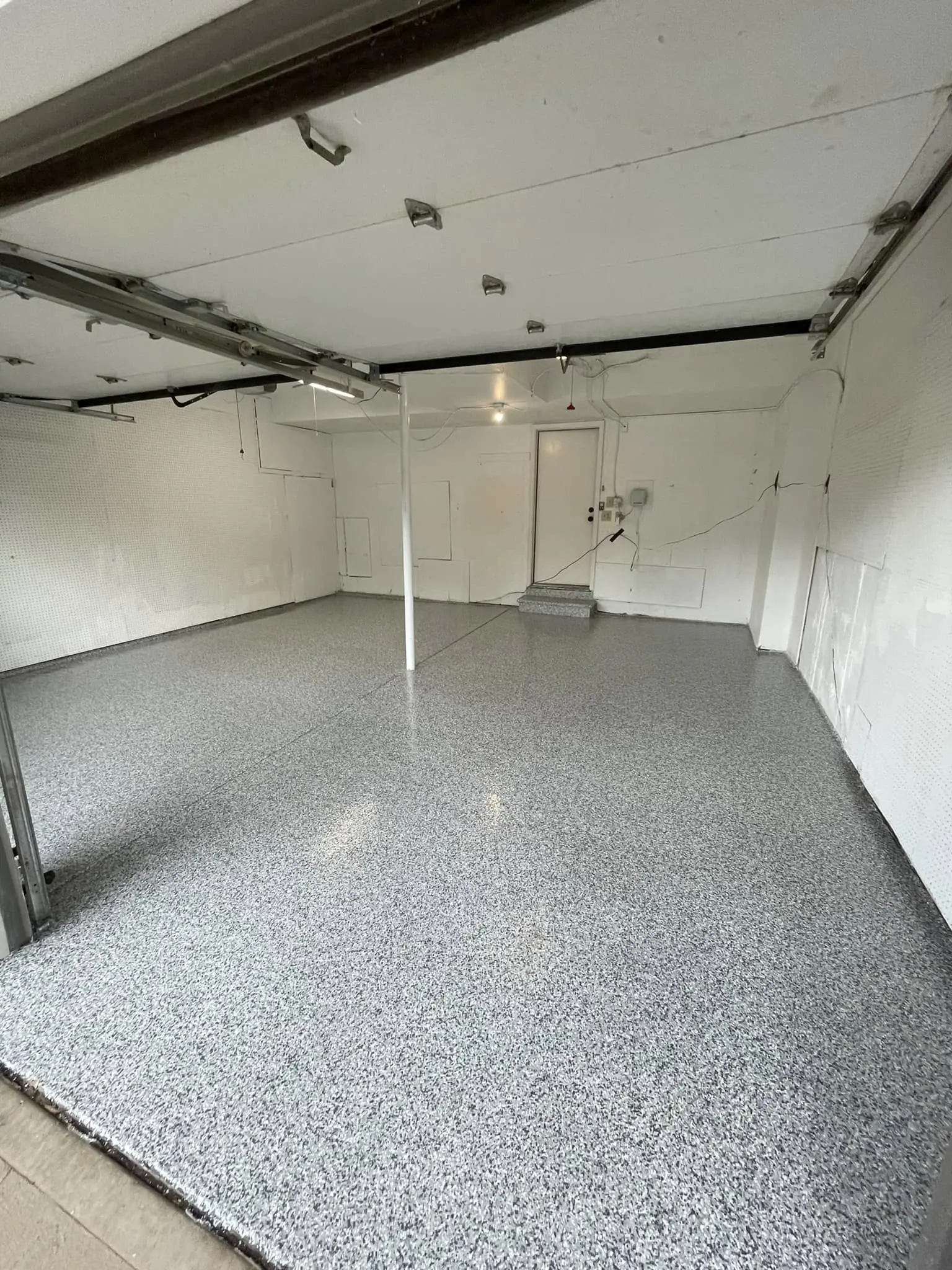
Where we talk people out of it is the everyday two-car garage. Arvada winters put magnesium chloride slush on that slab every time a car comes back from the foothills, and the ranch and split-level garages through the 1960s and 1970s belt are also bike storage, ski racks and a workbench. Metallic in that room turns into a showpiece surrounded by clutter, and every dropped socket lands on a floor you paid to look at. A flake system in the same bay hides the grit, softens hairline cracks and takes the abuse without asking for attention. Most of the time that is the better use of the money, and we will say it out loud.
Light matters just as much as clutter. A basement in the older core near Olde Town with two glass block wells will show a fraction of the movement you saw in a lit showroom photo. If a room is dark, we either plan lighting with you first or steer the color family toward a lighter base that still reads with what you have.
Pouring Metallic a Mile Above Sea Level
Metallic is a flow process, not a paint job. The resin goes down open, the pigment moves while it is open, and then it stops moving forever. How long that window stays open depends on the temperature of the slab, the temperature of the air and the humidity in the room, and Arvada sits at roughly 5,300 feet with all three swinging hard in a single day. A sunny February afternoon can run sixty degrees and the same garage can be below freezing by ten at night.
That swing changes the floor. Cold resin flows thick and lazy, so the pigment stays where it lands and the pattern goes tight and muddy. Warm resin runs fast and the window closes before the crew has finished working the lobes. Concrete also holds cold long after the air warms up, so we take a slab temperature reading rather than trusting the forecast on a phone. On an unconditioned garage in the shoulder seasons that usually means heating the space the night before and holding it steady through cure instead of starting at eight in the morning and hoping.
The same goes for scheduling. We would rather move a date by a few days than pour into a night that is going to drop thirty degrees on a curing floor. Nothing about that is dramatic, it is just the difference between a floor that looks like the sample and a floor that looks close.
Thinking about metallic for one room in Arvada?
Tell us which room and what it has to live next to. We will bring sample panels and walk the slab before anyone commits to a color.
The Slab Underneath Tells On You
A metallic floor is translucent. That is the whole appeal and it is also the risk, because anything left in the concrete reads through the finished surface. Patch work from a plumbing repair shows as a flat area with no movement. Saw cuts and control joints show as lines. A previous coating that was ground off unevenly leaves a ghost you can see from the doorway once the light hits it. Flake floors forgive all of that under the chip layer. Metallic does not forgive any of it.
Arvada gives us a wide spread of slabs. The pre-war and 1950s houses around the Olde Town core often have thin, hand-finished concrete with decades of repairs in it. The 1960s through 1980s ranch and split-level belt tends to have decent slabs that have been coated once already, usually with a hardware store kit that is now peeling in sheets. Newer construction out toward Leyden Rock and Candelas is generally flat and sound but still green enough that moisture needs checking before anything seals it.
So the prep is the job. We grind to sound concrete rather than scuffing what is there, chase and fill moving cracks with flexible material, and make a deliberate call on every joint about whether it gets filled and floated or honored as a line in the finished floor. Then we tell you what will still be visible when the floor is done. If the answer is too much for what you are paying, we would rather point you at flake epoxy or polished concrete than hand over a beautiful pour that displays every old repair in the house.
Sun, Topcoats and the One Shot You Get
Ultraviolet light at this elevation is unforgiving, and a metallic pour in a room with a wall of south-facing or west-facing glass is sitting in it for hours a day. Some clear coats amber over time, which turns a cool gray floor warm and takes the crispness out of a pearl. When a room has real glass exposure we specify a topcoat chosen for UV stability and tell you which one before the pour, rather than treating the seal coat as an afterthought at the end of the week.
The other thing worth understanding up front is that metallic is a single shot. A flake floor can be ground in a small area, recoated and blended back in well enough that you would have to be told where the repair happened. A metallic pattern cannot be patched, because the new flow will not match what is around it. A real repair means recoating the room. That is not a reason to avoid metallic, it is the reason we are stubborn about prep, topcoat selection and timing before a single bucket gets opened.
It is also why we do sample panels in your actual room rather than handing you a chip in a truck bed. We bring panels, set them on the slab where the floor is going, and look at them in morning light and again in the evening light with your fixtures on. Colors that look identical in a showroom separate completely once they are on a basement floor under recessed cans. Approve the panel in the room, at the time of day you will actually use it, and the finished floor holds no surprises.
Questions Arvada Homeowners Ask About Metallic
Should I put metallic in a garage I use every day?
Usually not. A working Arvada garage tracks de-icer, sand and snowmelt in from November through April, and metallic shows all of it until someone mops. It shows a dropped tool too. Flake hides that, so we send most daily-driver garages there and save metallic for the clean bay.
Our basement has a wall of south-facing glass. Will the color hold?
It can, as long as the topcoat is picked for it. Sun at this altitude is hard on clear coats, and a topcoat that ambers will turn a cool gray pour warm over a few seasons. When a room has that kind of exposure we specify a UV-stable topcoat and name it before the pour.
Can you copy a metallic floor I saw in a photo?
We can chase the color family and the general character of the movement. We cannot copy a pattern exactly, because the pigment travels on its own while the resin is open. Anyone promising a photo match is telling you what you want to hear. Sample panels are the honest version of that conversation.
What happens if the floor gets damaged later?
That is the hard part of metallic. A flake floor takes a spot repair and blends back in. A metallic pour does not, because a patch will never match the flow around it, so a real fix means recoating the room. It is why the prep and the topcoat carry more weight here than on any other system we install.
Do you pour metallic through an Arvada winter?
In a heated space, yes. In an unconditioned garage we go by slab temperature rather than the forecast. Concrete stays cold long after the air warms, and a room that drops thirty degrees overnight changes how the resin flows and sets. If we cannot hold it steady through cure, we heat it or we move the date.
Our slab was coated once and has patches and saw cuts. Is it a candidate?
Sometimes. Because metallic is translucent, old patches, joints and ghosting from a previous coating read straight through unless prep corrects them first. We grind to sound concrete, handle the joints deliberately, then tell you what will still show. If that list is too long, we say so before you commit.
How long does the room stay out of use?
Plan on the space being off limits for several days between grinding, the pour and the topcoat, with light foot traffic before vehicles or furniture. We give you the actual schedule for your room when we walk it, since slab condition and temperature both move that number.
More Floor Work Around Arvada
We cover Arvada from the Olde Town core out through Lake Arbor, Ralston Valley, Arvada West, Five Parks, Whisper Creek, Leyden Rock and Candelas, along with the rest of northwest Jefferson County.
All Arvada, CO services · Jefferson County · Service areas · See finished floors · Elevate my floor