Evergreen Polyaspartic Coatings
Polyaspartic is a clear topcoat that sets fast and stays flexible after it cures. Up here that matters most in two places. One is the landing and steps outside a sliding door, which take snow and melt all winter. The other is the detached garage that bakes in the sun one hour and sits in cold shade the next. We make the drive up from Parker, grind the concrete clean, and build the floor for the weather it will actually see.
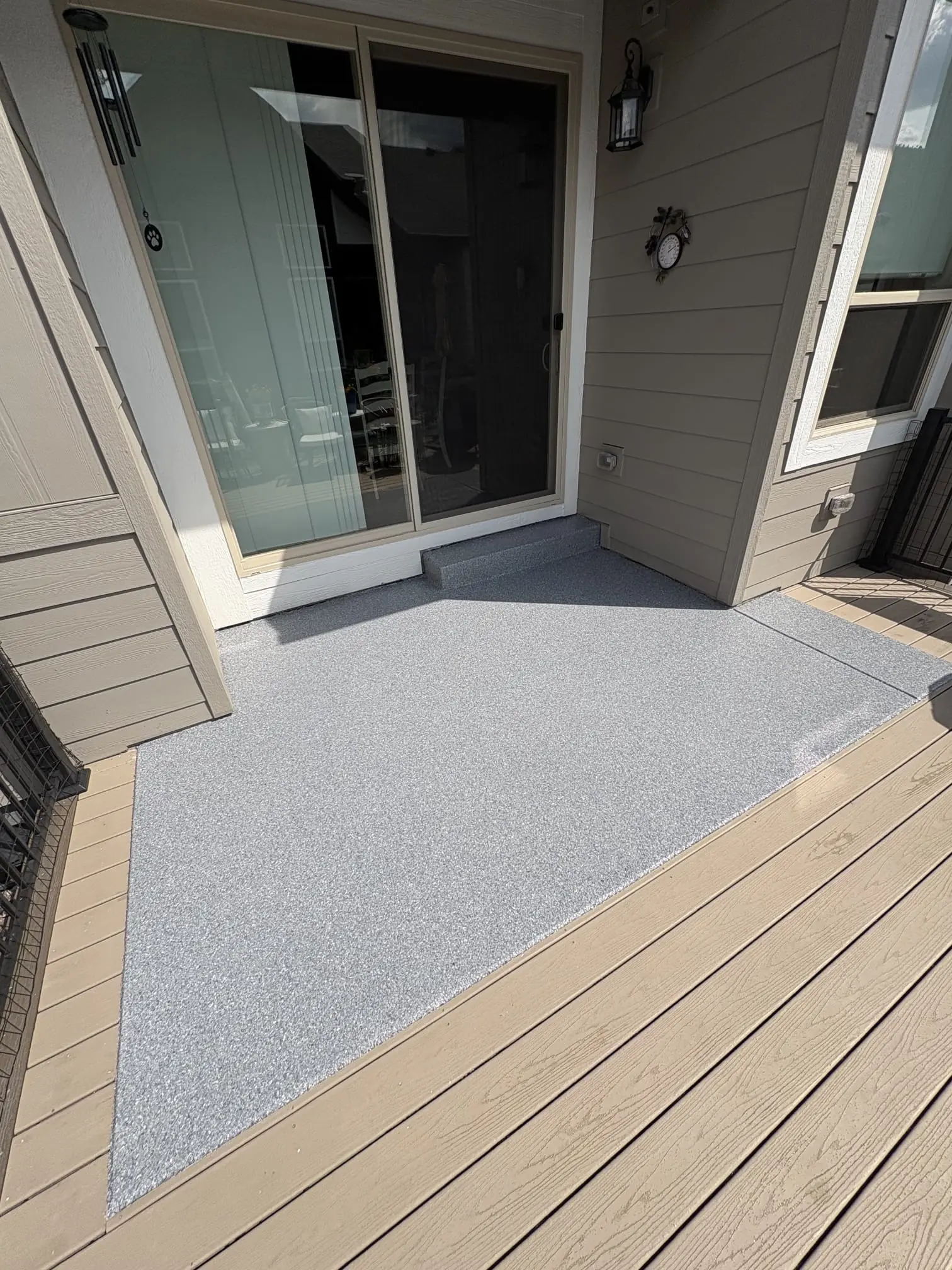
Landings and Steps Outside the Sliding Door
Plenty of Evergreen homes open onto a small concrete landing or porch pad outside a sliding door, often with a step or two down to the yard. Those few square feet take more weather than any floor inside the house. Snow piles on them, melts in the afternoon, and freezes again along the edges at night, over and over through a long freeze season.
Bare concrete drinks that water. When it freezes inside the surface, it pops off small flakes and leaves step edges crumbling. A coating that turns brittle in the cold does its own damage: it cracks, lets water get under it, and comes up in sheets by spring. Polyaspartic stays flexible and moves with the slab. It also seals the surface, so meltwater sits on top where a broom or the sun can deal with it.
People walk those steps in wet boots, so grip matters. We broadcast flake into the base to hide grit, then work a fine grit into the topcoat for traction. The nose of each step gets hand-ground and wrapped with coating, because that edge takes the hardest hits from boots and shovels.
Where the concrete meets deck boards, siding or a door threshold, we mask and hand-grind so the coating stops on a clean line.
A Detached Slab That Bakes, Then Freezes
Detached and partly heated garages here swing hard between sun and shade. Open the door on a clear morning and the front of the slab warms in direct light while the back corner stays cold. After dark the whole floor drops again. Concrete grows and shrinks through all of that, and unevenly, so the front and back of one slab move by different amounts at the same moment.
Rigid coatings handle that badly. They tend to crack at the control joints first, then along the line where sun meets shade, and water works in behind them. A flexible polyaspartic topcoat bends with the slab. Before it goes down, we fill control joints and cold-pour cracks with polyurea so they stop shifting the coating from underneath and do not telegraph through the finish.
Sun also bleaches a cheap topcoat. Polyaspartic keeps its color, so the strip just inside the door still matches the floor by the back wall.
Mag Chloride and Road Sand Rolling In on Tires
Every winter drive brings the road home on the truck. Tires pack sand into the treads, and magnesium-chloride road treatment coats the wheel wells and drips off as it melts. On bare concrete that brine soaks in, dries into white rings, and keeps chewing at the surface through each freeze. The sand grinds under boots and tires like sandpaper.
A sealed polyaspartic film keeps the brine on top, where it dries as a residue you can rinse away with a hose and a squeegee. We pick a flake blend busy enough to hide sand and salt between cleanings. The film goes on heavier in the lanes where tires stop, and we add grit where people come in wet from stacking firewood or hanging up snow gear and lake equipment.
Upkeep through the season is plain work. After a run of storms, open the door on a dry afternoon, hose the bays toward the drain or the apron, and pull the water out with a squeegee. A push broom handles the sand in between. Skip harsh degreasers on the topcoat; mild soap does the job and leaves nothing behind to hold grit.
Back in the Garage Before the Next Storm
In a mountain garage the weather sets the calendar. Nobody wants the trucks parked outside through a snowstorm while a floor cures. Polyaspartic sets fast, so the whole system goes down on a short schedule and you get the garage back quickly. You can walk on it well before you can park on it, and we hand you exact times for both before we leave.
It opens up more of the year, too. Standard epoxy wants a warm slab and patience, both hard to come by in a detached garage in winter. Polyaspartic handles cooler conditions, though it still has limits. We check the slab temperature and the forecast, and when a cold snap is coming we move the date. If there is a storm or a trip on your mind, tell us the window you have and we will plan the day inside it.
Pick a Visit DayTalk to the Floor Crew
We drive up from Parker to Evergreen, Bergen Park, Hiwan and Kittredge, look at the landing or garage with you, read the slab, and tell you which build fits it.
(720) 635-0282What happens on install day
Grinding comes first, then polyurea in the joints and cracks, then the base coat and flake.
The polyaspartic topcoat goes on last, with grit wherever the floor gets wet, and we walk it with you before we pack up.
Grinding Out the Mineral Film First
Well water leaves minerals wherever it dries on bare concrete. In a garage that means a pale crust around the drain, under the hose bib, and in the spot where the truck drips after a wash. On a landing it gathers where snowmelt pools. The crust is loose. A topcoat stuck to it is only as strong as the crust, and it lets go in those same patches.
Acid washing and scrubbing leave minerals down in the pores, so we skip them and diamond grind the whole surface. That takes off the mineral film, any old sealer and the weak top skin of the concrete, and it opens the slab so the base coat soaks in and holds.
- Grind wall to wall, with a hand grinder on edges, posts and step noses
- Fill control joints and cold-pour cracks with polyurea
- Vacuum and look for any leftover film or sealer
- Read the slab for moisture before the base coat
Everything else on this page depends on that grind.
Polyaspartic Questions We Hear in Evergreen
Can you coat the landing and steps outside our sliding door?
Yes, if the concrete is sound. Those spots take snow and meltwater all winter, so we grind them clean, hand-work the step edges, and finish with a flexible polyaspartic topcoat carrying grit for traction. Steps that are badly spalled or crumbling may need repair before any coating goes on.
Will the coating crack in a garage that swings between sun and shade?
Polyaspartic stays flexible after it cures, so it moves as the slab warms in the sun and cools in the shade. We also fill control joints and cold-pour cracks with polyurea first, which keeps them from shifting the coating from underneath or showing through the finish.
What happens when magnesium chloride drips off the truck?
On a sealed polyaspartic floor the brine stays on the surface and dries as a residue that rinses off with water. Hose and squeegee the floor now and then through winter. A busy flake blend hides the sand and salt rings between cleanings, so the garage looks tidy longer.
How fast can we park in the garage again?
Polyaspartic sets quickly, which is the main reason people choose it for a mountain garage. You can walk on it well before you can park on it. We give you exact times for both before we leave, since a cold slab or a damp day stretches them, and we pick the date around the forecast.
Can you install it in the winter?
Often, yes. Polyaspartic handles cooler conditions better than standard epoxy, which helps in a detached or partly heated garage. It still has limits. We check the slab temperature and the forecast ahead of time, and if a hard cold snap is on the way, we move the date.
Our well water left white crust on the slab. Is that a problem?
Only if it stays. That crust is loose mineral, and a coating bonded to it peels in the same spots. We diamond grind the whole surface to take off the minerals, old sealer and the weak top layer, then look for any film left behind and read the slab for moisture.
Other Systems We Run Up in Evergreen
Most of our polyaspartic work is the top layer of a bigger floor. The other Evergreen pages cover what goes underneath it.
- Evergreen Garage CoatingsBuilds for detached bays and working garages.
- Evergreen Flake EpoxyThe chip layer under most of these topcoats.
- Evergreen Metallic EpoxyPoured floors for warm lower-level rooms.
- Evergreen Concrete PolishingGround slabs with nothing to peel.
All of our mountain work is on the Evergreen, CO page, and the polyaspartic coatings page goes further into how the system works. Neighboring towns are listed under Jefferson County. Finished entries and garages are in the gallery, and the contact page gets you on the schedule.