Highlands Ranch Flake Epoxy
Flake epoxy is the floor most Highlands Ranch homeowners land on once they see the options side by side. It is tough enough for a three-car garage full of bikes, skis, and gear, forgiving enough to hide the hairline imperfections that older Douglas County slabs develop, and it goes down in a single day. Elevated Epoxy Co installs full-broadcast flake systems across Highlands Ranch with polyaspartic topcoats built for high-altitude sun and hard freeze-thaw winters.
How Flake Epoxy Works in a Highlands Ranch Home
The vinyl flakes do two jobs at once. Visually, they add texture, color depth, and a consistent pattern that reads finished rather than painted. Structurally, they build a slightly raised profile that resists slips and disguises the small scuffs and scratches a working garage collects over the years. We broadcast quarter-inch chips into the wet epoxy so they land at random angles, which is exactly why a flake floor still looks even after a season of dropped tools and dragged bins. On the newer slabs common across Highlands Ranch neighborhoods like BackCountry and Firelight, that texture keeps a clean install looking clean far longer than solid color.
Coverage is a choice. Full broadcast means we saturate the wet epoxy until it will not take another flake, which is the standard for Highlands Ranch garages where durability and stain-hiding matter most. Partial broadcast at roughly 60 to 75 percent coverage lets the base epoxy color show through, a look homeowners often pick for a finished basement or a home gym where the base tone is part of the design. Both finish with a polyaspartic clearcoat. Full broadcast costs a little more in flake material and is worth it for daily-driver garages.
Not All Flake Is the Same Flake
The chips themselves come in sizes, and the size changes the read of the floor. Quarter-inch flake is our default for Highlands Ranch garages: big enough to build good texture and hide slab marks, small enough to still look clean and consistent. One-inch flake gives a bolder, more terrazzo-like pattern that some homeowners love in a showcase garage or a walk-out basement. Fine 1/16-inch flake reads almost like a solid speckle, which suits a subtle, modern basement floor. We can also blend sizes for a custom look. The chips are UV-stable vinyl, not the cheap paper or mica bits some kits use, so the color holds and the flake will not powder out from under the topcoat.
The finished flake floor lands around 25 to 30 mils thick, and the flake sits inside the build rather than on top of it. After the broadcast cures, we scrape the loose flake off and sand the sharp upright edges flat before the polyaspartic goes down, which is what gives a good flake floor its smooth, sealed feel instead of a rough, sandpapery one. That scrape-and-sand step is easy to skip to save an hour, and skipping it is exactly why some budget flake floors feel gritty and shed chips. We do not skip it.
Flake Beyond the Garage: Basements and Gyms
Most of our Highlands Ranch flake work is in garages, but the system shines in finished basements and home gyms too, and the spec shifts a little for those rooms. In a basement the moisture question comes first: we run a slab moisture test and, where the reading is high in the lower, damper pockets of the community, install a moisture-mitigating primer before anything else. The flake and polyaspartic then give you a warm, seamless, low-maintenance floor with none of the seams a click-together product leaves. In a home gym, the slightly raised flake texture adds grip underfoot and the polyaspartic shrugs off dropped dumbbells and rubber-mat scuffing far better than paint or vinyl. Partial-broadcast coverage is popular in both rooms, since letting some base color show reads more like a designed living-space floor than a utility garage.
Choosing a Flake Color That Fits the Neighborhood
Highlands Ranch homes lean toward architectural consistency, and the HOA standards that shape the exteriors tend to shape floor choices too. Most homeowners here go with neutral blends, warm grays, tans, and earthy browns, that read intentional and hold their resale value if the home sells. Bolder blends with copper, slate, or blue accents show up in personal showcase garages, and they look great, but they narrow the buyer pool later. Custom blends need about a week of lead time for the flake to arrive. We bring physical sample boards to every quote so you approve the exact blend before we grind a thing.
Why the Polyaspartic Topcoat Is the Whole Point
A flake floor is only as good as the clearcoat sealing it, and at 5,900 feet the topcoat has to earn its keep. Our polyaspartic topcoat is UV-stable so a west-facing Highlands Ranch garage with the door open all afternoon will not amber the way an epoxy-only clearcoat does. It shrugs off oil, antifreeze, and brake fluid, takes a rolling tool chest without scratching, and cures fast enough that you drive on it in 72 hours instead of the week-plus older epoxy topcoats demand. The budget systems that skip polyaspartic in favor of extra epoxy or polyurethane are the ones that yellow and dull in a few Colorado summers. For a floor you actually use, polyaspartic is the answer.
Ready for Highlands Ranch flake epoxy floors?
Call us, send a message, or browse our gallery to see real Douglas County projects.
Highlands Ranch Flake Epoxy FAQ
Highlands Ranch Flake Epoxy FAQ: What does a flake floor cost?
A standard flake-and-polyaspartic two-car Highlands Ranch garage is a one-day, fixed-price job. Three-car garages, which are common here, scale up from there. Finished basement floors are priced by the square footage and the prep the slab needs. We quote after an on-site measurement.
Highlands Ranch Flake Epoxy FAQ: Can you coat over my existing garage paint?
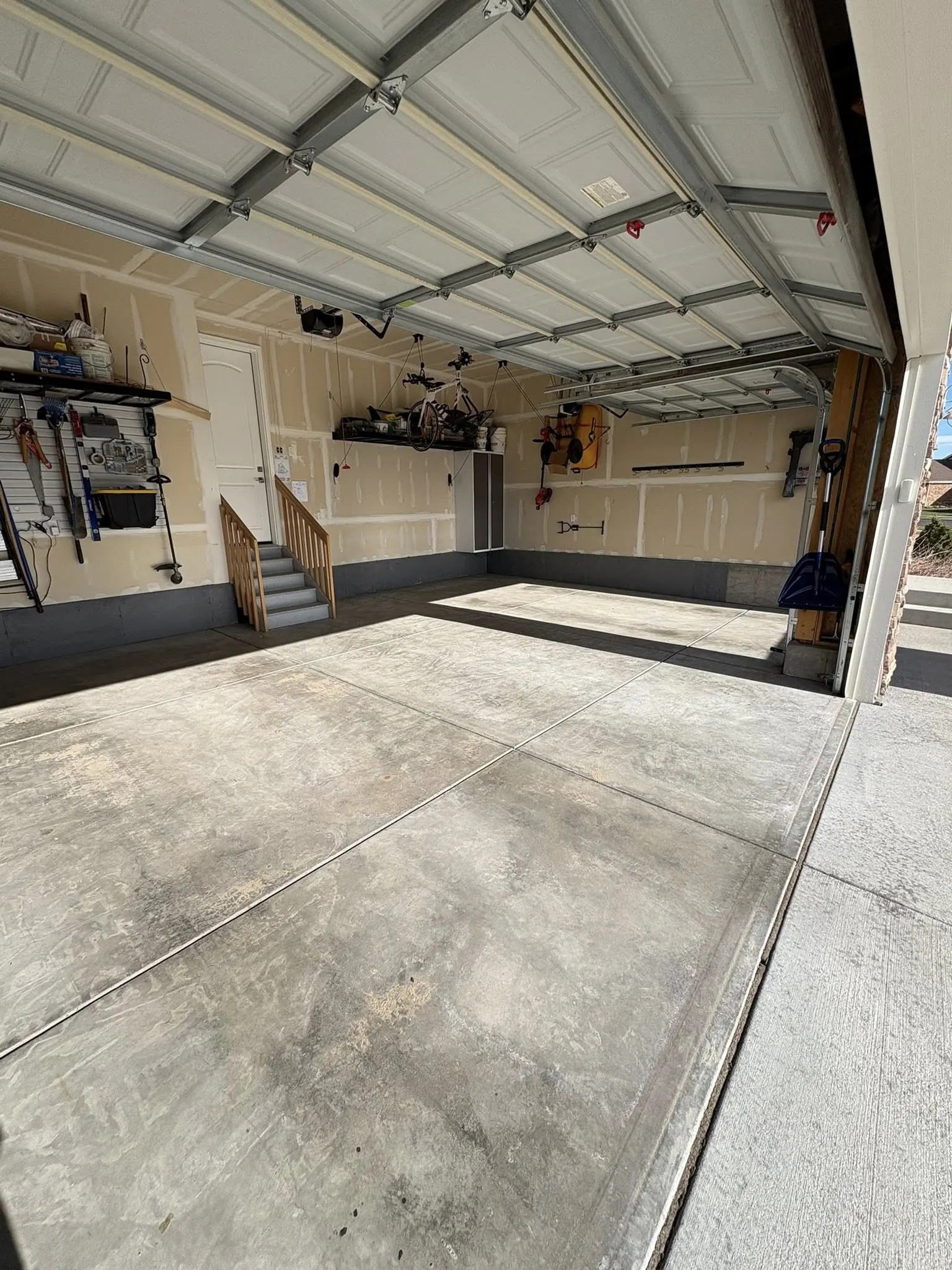
No. Old garage paint has to be ground off first. Coating over paint is the number-one cause of adhesion failure, so we never do it. Diamond grinding down to clean concrete is part of every Highlands Ranch install.
Highlands Ranch Flake Epoxy FAQ: How thick is the finished floor?
The full system lands around 25 to 30 mils of dry-film thickness, roughly the thickness of a credit card. It will not change your garage door clearance or catch on the threshold when you pull in.
Highlands Ranch Flake Epoxy FAQ: Will it hide the cracks in my slab?
Hairline cracks up to about 1/16 inch get filled with polyurea before we prime, and the flake layer masks cosmetic marks like minor stains and surface variation. Larger structural cracks get assessed first, since a coating cannot fix a moving slab.
Highlands Ranch Flake Epoxy FAQ: Does flake work in a finished basement?
Yes, and it is one of our favorite basement floors. The one extra step is moisture testing the slab first, since some lower Highlands Ranch basements run damp. Where the reading is high we install a moisture-mitigating primer before the build coats. Partial-broadcast coverage is popular in basements because letting some base color show reads more like a living-space floor than a garage.
Highlands Ranch Flake Epoxy FAQ: How do I keep it looking new?
Sweep or dust mop regularly, and wet-mop spills with mild soap and water. Skip solvents and abrasive scrubbers. Basic upkeep like that can add years to how long the floor keeps its finish.
Other Highlands Ranch Epoxy Flooring Services
View all Highlands Ranch, CO services · See our work · Elevate My Floor
Service Area: Highlands Ranch, CO
We serve all of Highlands Ranch, CO and surrounding Douglas County neighborhoods.