Lone Tree Retail Storefront Flooring
A store floor has two jobs. It has to look good enough to help sell what sits on it, and it has to hold up to carts, pallet jacks and the water that runs off a cooler door every day. We coat retail floors for shops around Park Meadows, Sky Ridge and RidgeGate, and we plan most of them around one weekend so your doors open Monday like any other week.
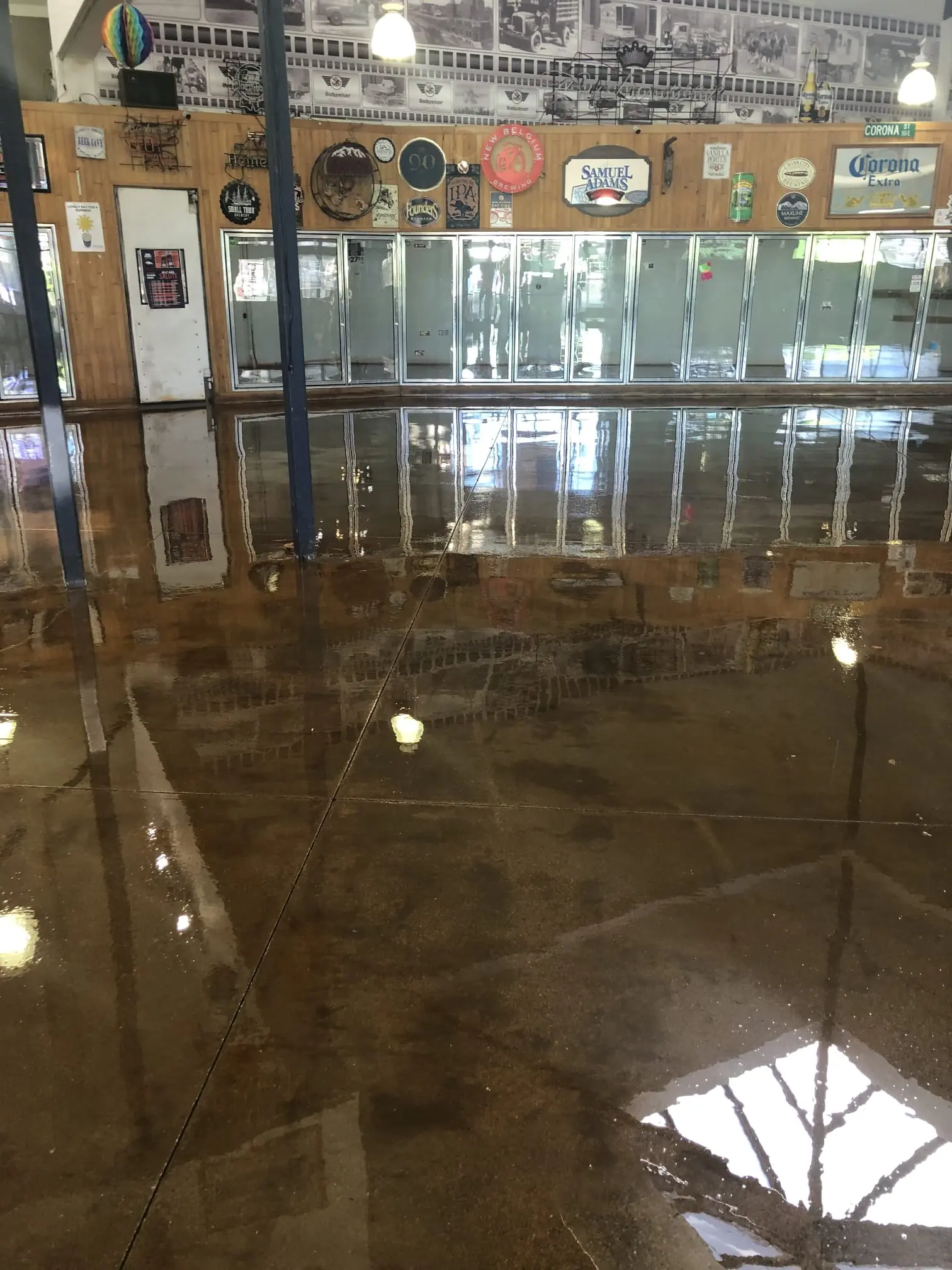
Start at the Cooler Doors
The aisle in front of a wall of glass-door coolers is the hardest square footage in most stores. Every time a customer opens a door, warm store air hits cold glass and the frame sweats. That water runs down and sits at the base of the cooler line, day after day. Bare concrete there soaks it up, darkens and starts to dust. An old coating usually fails there first, lifting at the edge where the water collects.
So the cooler run is where we start looking when we walk a store. We check how damp the concrete is along that wall, how well the old floor is holding on, and whether the slab under the cooler bases is sound. Diamond grinding takes the whole aisle down to clean, open concrete, including the strip tight against the coolers where a lot of crews stop short. A coating that ends an inch shy of the cooler base leaves a dark line of raw concrete right where the water lands.
Walk-in cooler corridors behind the racks get the same attention. They are cold, they stay damp, and stockers push hand trucks through them all shift. We talk through timing on those rooms with you, because a cold slab cures slower than a warm sales floor, and the system that suits a walk-in may differ from the one out front. A fast-cure topcoat is often what gets a cooler corridor back in use by Monday.
Friday Night to Monday Morning
Most store owners in Lone Tree cannot close for a week, and they should not have to. For a lot of shops we do the whole floor over one weekend. The crew shows up after you close Friday, moves what has to move and starts grinding. By late Saturday the primer and base coat are down, with cure time between them. Sunday is the decorative layer and the topcoat. Monday morning we walk the floor with you and hand it back.
That schedule works because the topcoat is a fast-cure polyaspartic, which takes foot traffic within hours of going down. A standard epoxy as the final coat would need days. We still respect the cure time between layers. Rushing a base coat to hit a deadline is how floors peel a year later, and we would rather tell you a store needs two weekends than hand you a floor that lets go.
Bigger stores, or spaces that cannot go dark even for a weekend, get done in phases. We coat one section while you sell out of another, then swap. Gondolas, racks and the checkout counter all decide where the lines between phases fall, so we walk the store with you before we commit to a plan. Your stock and your staff need somewhere to be while we work, and the schedule has to make room for both.
Joints, Carts and Pallet Jacks
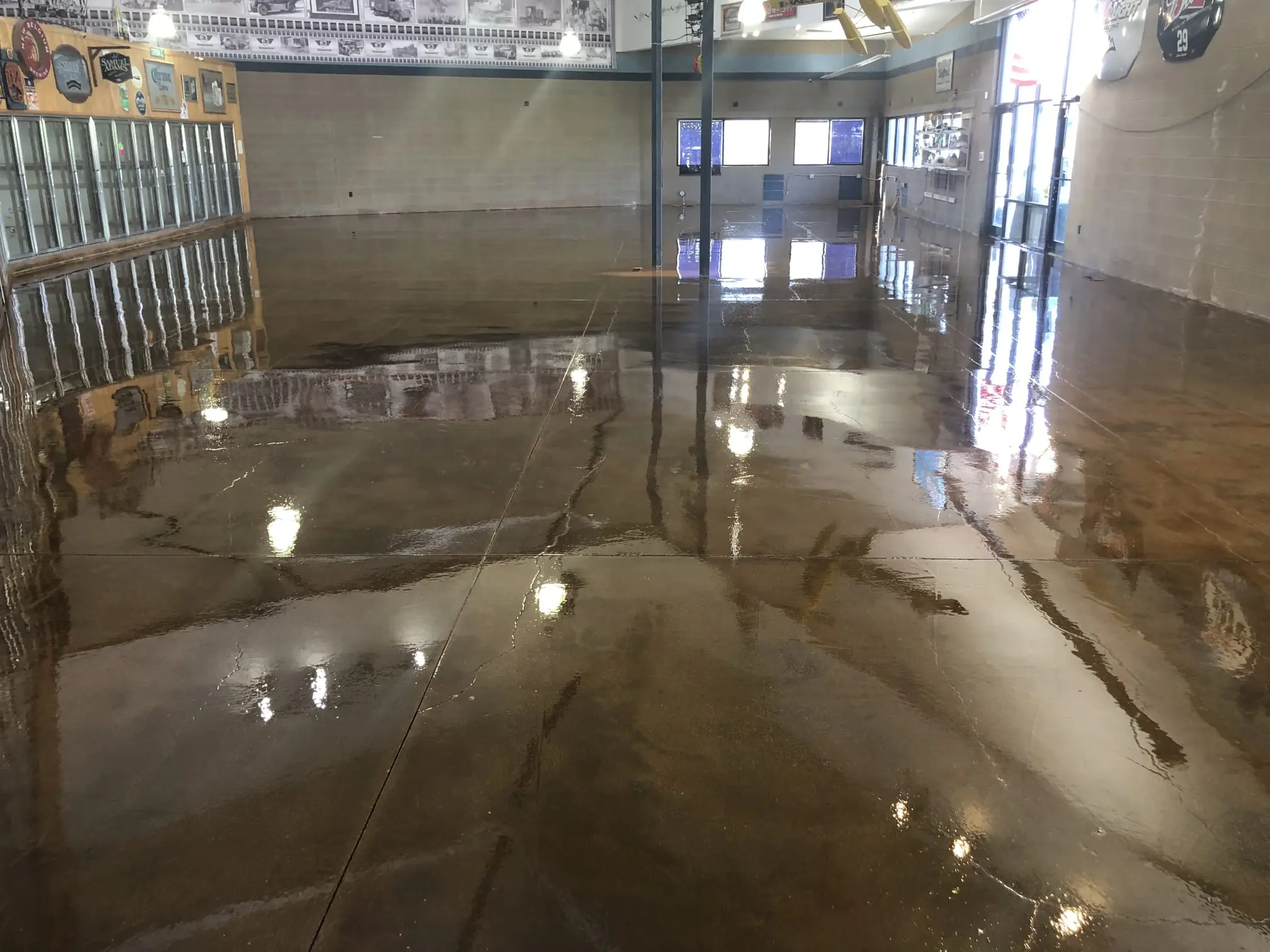
Look across a big store slab and you will see saw-cut lines running across it every so often. Those are control joints. They are there so the concrete cracks in a straight line where somebody planned it, instead of wandering wherever it likes. Coat straight over them with a rigid resin and the slab keeps moving anyway, so the coating cracks along the same line, only ragged.
We carry the joints through the coating. They get cleaned out before the base coat, the system is built up to and into them, and they are finished with a flexible filler so the slab can still move where it was cut to move. You end up with clean, straight joints showing in the gloss, and the floor between them stays whole. Random cracks that are not joints get repaired before anything is coated.
Then there is everything that rolls. Shopping carts, stocking carts, dollies stacked with cases and the pallet jack bringing in Tuesday’s delivery all grind grit into a floor. Hard plastic wheels and steel pallet jack wheels put a lot of weight on a very small spot. That is why we build the system with real thickness and a hard topcoat, and why the receiving door and the main aisle get extra care in prep. A coated floor also has no grout lines for a wheel to catch on.
How Much Shine a Sales Floor Should Carry
A high-gloss floor bounces light around a store. Product looks brighter, the room reads cleaner, and a brown or gray floor under bright cooler lights can look almost like polished stone. Plenty of shop owners want that look, and for good reason. Gloss gives something up in footing, though, and you feel it wherever water or a spilled drink meets a shoe.
We handle that by zone, without dulling the whole store. The sales floor can carry full gloss. The cooler aisle, the entry and the walk-in can take a fine grit in the topcoat or a textured broadcast that gives shoes something to grab. The difference is hard to see from the front door and easy to feel underfoot. We put samples of both on your own slab, under your own lights, before you choose.
System choice follows the store. A solid color keeps attention on the merchandise and can be matched closely to a brand color. Flake hides wear and adds a little texture. A quartz broadcast makes a tougher, textured surface for heavy traffic, and metallic gives a boutique or showroom a floor nobody else has. Logos and wayfinding lines can go into the floor as well. We pick the system after we understand how your customers move through the space, then we talk color.
Bring Us Your Slowest Weekend
Call (720) 635-0282 or send the form. We come over, walk the aisles with you, look at the cooler line and the joints, and put a written quote and a schedule in your hands.
Questions Lone Tree Shop Owners Ask
Can you really finish a store over one weekend?
Many stores, yes. We start after you close on Friday and walk the finished floor with you on Monday morning. The fast-cure polyaspartic topcoat is what makes that timing possible. Larger spaces, or stores with a lot of heavy fixtures, may need phases, and we tell you that when we walk the store.
What happens to our fixtures and stock?
Gondolas and racks that can move get moved, and we plan where they sit while we work. Coolers and built-in fixtures usually stay put, and we coat right up to their bases. We settle all of that with you before the weekend, so nothing gets decided at midnight on a Friday.
Will the floor be slippery near the coolers?
It does not have to be. Condensation collects at the base of glass-door coolers, so we usually add grit to the topcoat or lay a textured broadcast in that aisle. The rest of the store can keep a higher gloss, and the change between the two is hard to spot by eye.
What do you do with the saw-cut joints?
We keep them. Control joints let the slab move where it was cut to move. We clean them out, build the coating to them and finish them with a flexible filler. Coating straight over a joint with rigid resin only leads to a ragged crack along the same line a few months later.
Can the floor match our brand colors?
A solid-color system can be matched closely to a brand color, and logos or wayfinding lines can be built into the floor. We bring physical samples to your store so you judge the color under your own lighting. A color that looks right in a showroom can read very differently over your aisles.
How do we clean it day to day?
Sweep daily and mop with a neutral cleaner. There is no wax to strip and no grout to scrub, and an auto-scrubber is fine on a cured floor. Wipe up water at the cooler line when you see it, since standing water is what makes any store floor slick.
How do you put together a quote for a store?
We walk the space with you, measure it, and look at the slab, the joints, the cooler line and everything that has to move. Square footage, prep work and the system you choose drive the number. You get a written quote with the weekend or phase schedule spelled out.
More Floor Work Around Lone Tree
All Lone Tree floor services · Store floors in the gallery · Plan a Weekend Install
Where We Work in Lone Tree
We are based in Parker, one exit east on Lincoln Avenue, which puts Lone Tree closer to us than any other city we serve. On a weekend install that matters. If a cooler needs sliding back into place Sunday night, or a stocker has a question Monday morning, we are ten minutes away.