Lone Tree Basement Floor Coatings
A basement floor sits on concrete that touches the ground, and that slab is always giving off some moisture. Before we talk about colors for a Lone Tree lower level, we test it. Then we mask the walls, grind, and build a moisture-tolerant system that holds up under a home gym, a theater or a guest suite. Every basement floor we put down carries our lifetime warranty.
The Test Comes Before the Color Chart
Concrete below grade pushes moisture vapor up through itself all year long. You cannot see it, and the floor can look and feel bone dry. But that vapor is what lifts a garage-grade epoxy off a basement slab in bubbles a few months after it goes down. So the first thing we do in any basement is measure.
We run a calcium chloride test, which shows how much vapor the slab is releasing, and a relative humidity test inside the concrete itself. Those readings decide the primer. A slab with modest readings gets a moisture-tolerant epoxy primer that bonds to damp concrete. A slab with high readings gets a heavier vapor-barrier system before anything decorative goes on top.
Sometimes the test tells us the floor is not ready. If water is actively coming through cracks or seeping in at the edges, a coating is the wrong fix, and we will tell you to sort out drainage or the foundation first. We would rather walk away from a job than put down a floor we know will fail.
The test is also why a basement quote from us takes a second visit. We set it up, come back to read it, and only then write the number, because two Lone Tree basements a few doors apart can test very differently.
Gym, Theater or Guest Suite
Lone Tree basements tend to finish into one of three rooms, and each asks something different of the floor. A home gym needs a surface that takes dropped dumbbells and a sweaty bench without caring. A theater wants a floor that looks rich in low light and does not throw glare back at the screen. A guest suite wants a floor that feels like part of the house next to new trim and fresh paint.
A coated slab handles all three. It seals the concrete, so the room stops smelling like a basement. Spills wipe up with a paper towel. A leak from a water heater or a washing machine turns into a mop job instead of a ruined carpet and pad. There are no grout lines or laminate seams for water to sneak into, either.
For a gym we usually build a flake or solid-color system with a little texture underfoot. Theaters and guest rooms are where people pick metallics and high gloss, since the floor becomes part of the look of the room. Plenty of owners lay an area rug on top in the theater for warmth, and the coating does not mind.
Start With a Moisture Reading
Call (720) 635-0282 or send the form. We bring the test kit, read the slab, and tell you which system it needs before anyone opens a color chart.
Two Lower Levels, Two Different Floors
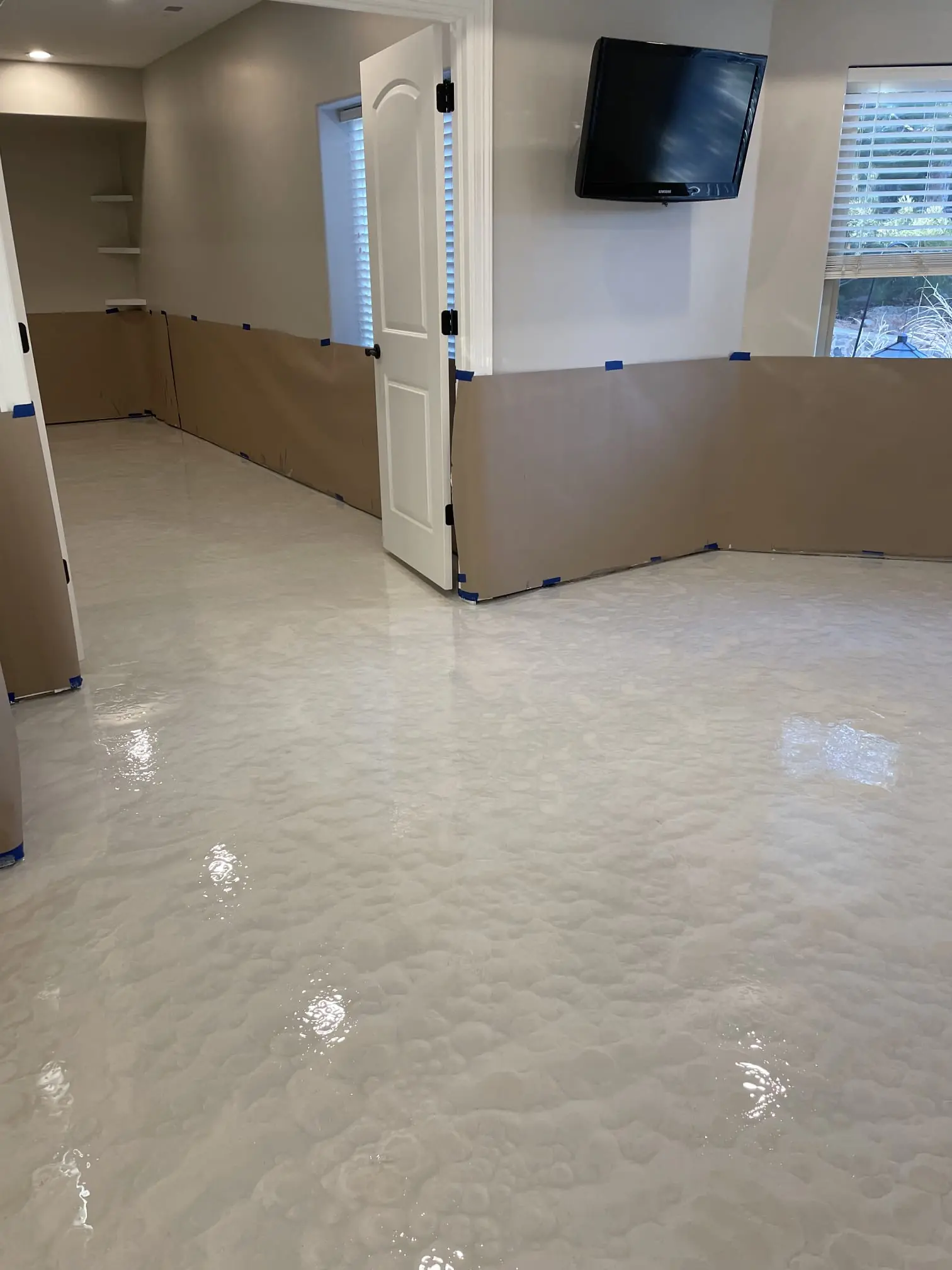
The photo at the top of this page is a finished lower level with a pearl white metallic floor in high gloss, the walls still masked in brown paper below a mounted TV. A light metallic like that brightens a room that only gets daylight through egress window wells, and the movement in the pour looks a little different from every seat on the couch.
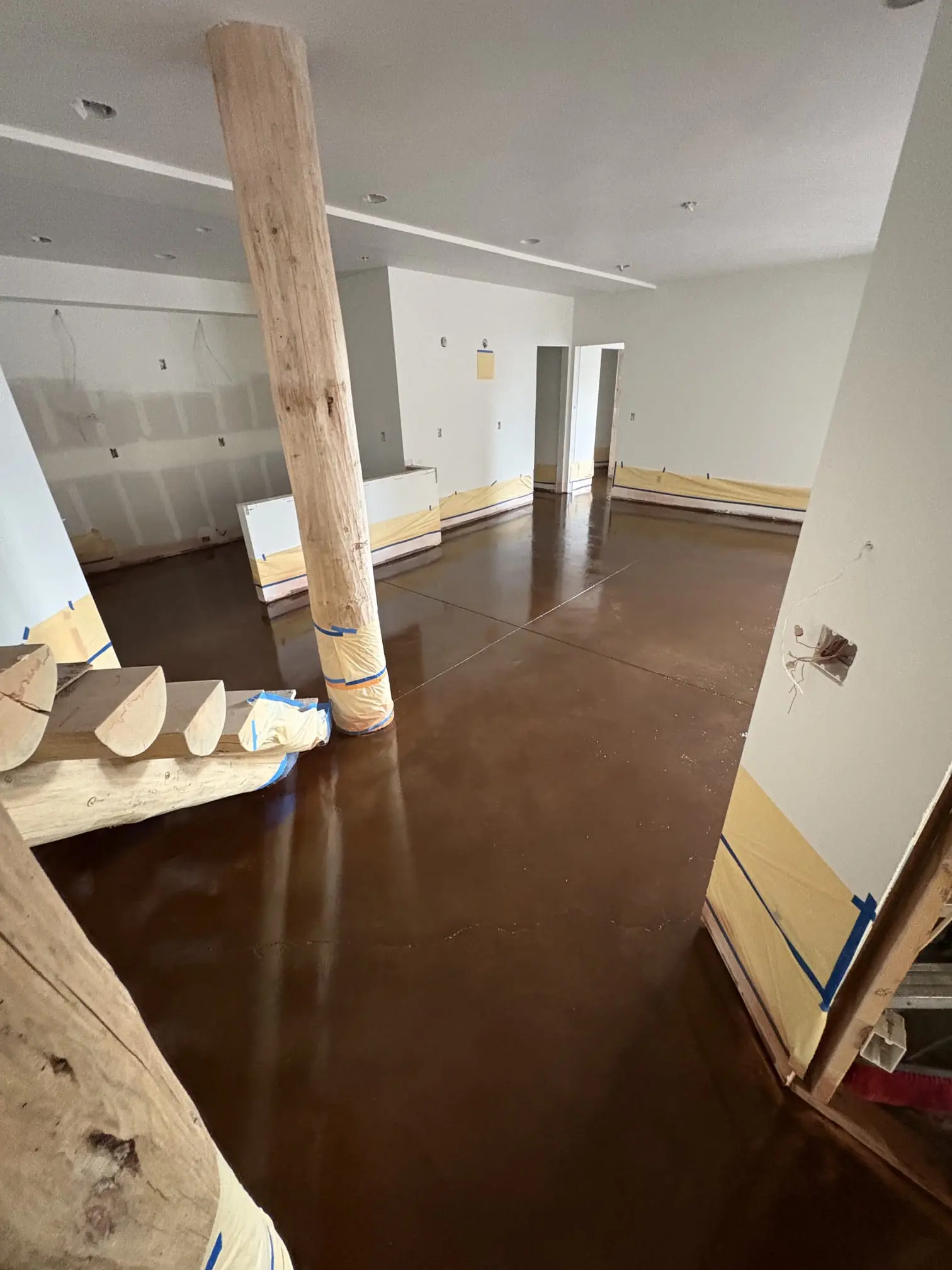
The photo here is the opposite case: an unfinished lower level with a glossy brown floor that wraps around a peeled log post. A floor like that suits a space used for storage, a workbench or a future build-out. The brown hides dust and sits well next to the wood, and the slab is sealed either way. The post means hand work, cutting the coating in around its base so the line stays clean.
Between those two sits everything else we install downstairs, from flake blends in gyms and rec rooms to solid colors and darker metallics in theaters. We carry physical samples down your stairs and look at them under your own lighting, since a color that works in a showroom can go flat under recessed cans.
Paper on the Walls, Tape on the Trim
Basement floors usually get coated after the drywall is up, and sometimes after the paint. Before a grinder comes down the stairs, we mask every wall with tape and brown paper. The grinders run with vacuums attached, so the dust goes into a bag and stays off your new walls. The paper stays up until the topcoat has cured, then it comes down in one pass.
A basement slab runs cool, and standard epoxy cures soft and slow in a cool room. The systems we use downstairs are made to cure properly at basement temperatures, with a flexible polyaspartic topcoat that handles the difference between a cold slab and a warm finished room. When the weather allows, we open the egress windows for air while we work.
Prep is diamond grinding, never acid etching. Grinding takes off old paint, sealer and the white efflorescence that shows up on basement slabs, and it leaves a profile the primer can grip. Coating over old paint is the fastest way to a floor that peels, so all of it comes off first.
The path in matters as much as the room. We lay protection over the stairs and the hallway we carry equipment through, and we keep hoses and cords off your finished floors upstairs. Most of the noise comes during grinding. After that, coating is quiet work, and most families go about their day upstairs while we finish the floor below them.
We give you the schedule once we know the square footage and which system the moisture test calls for, including when you can walk on the floor and when the furniture can come back down.
What Lone Tree Owners Ask About Basement Floors
My basement feels a little damp. Can it still be coated?
Often, yes. The moisture test tells us how much vapor the slab gives off. Moderate readings get a moisture-tolerant primer, and higher readings get a vapor-barrier system. Standing water or water pushing through cracks needs to be fixed first.
Will the coating stop moisture coming up through the slab?
The primer layer is built to keep vapor from reaching the coating above it, which is what keeps the floor from bubbling. It does not fix drainage or foundation problems, and we will tell you if we see signs of those.
Is a coating better than carpet or LVP downstairs?
For a gym, a theater with a rug, or a storage and laundry area, we think so. A coating seals the slab, cleans with a mop and survives a leak. Some people still lay rugs on top for warmth, which works fine.
Can you coat over old paint or sealer?
No. Paint and old sealer get ground off down to bare concrete first. A coating is only as strong as what it is bonded to, and old paint lets go.
Will grinding make a mess of my finished walls?
We mask the walls with tape and paper and run our grinders with dust collection attached. The paper comes down after the topcoat cures. You will see some dust on the paper, which is exactly why it is there.
How do I clean a coated basement floor?
Sweep or dust-mop it, then damp-mop with warm water and a mild cleaner. Skip harsh chemicals and anything waxy. If something spills, wipe it up when you notice it. The coating does not absorb it the way bare concrete or carpet would.
Is the floor covered by a warranty?
Yes. Every basement floor we install carries our lifetime warranty against peeling and bubbling. We can offer that because we test the slab first and use systems made for below-grade concrete.
More Lone Tree Floors, Upstairs and Out
Garage floors and everything else we coat in town live on the Lone Tree page. There are more lower levels and metallic pours in the gallery if you want ideas before we visit.
Lone Tree Basements, Ten Minutes Out
We coat lower levels in homes all over Lone Tree, from the older ranches in Heritage Estates to the streets around Lone Tree Country Club. Our base in Parker is the next exit east on Lincoln Avenue, so the test setup, the reading, the install days and any follow-up are all short drives for us.
Being close helps more on basements than on almost any other job. If other trades are finishing your lower level at the same time, we can fit our days in between theirs instead of asking everyone to wait on us. Tell us where the project stands and we will plan around it.