
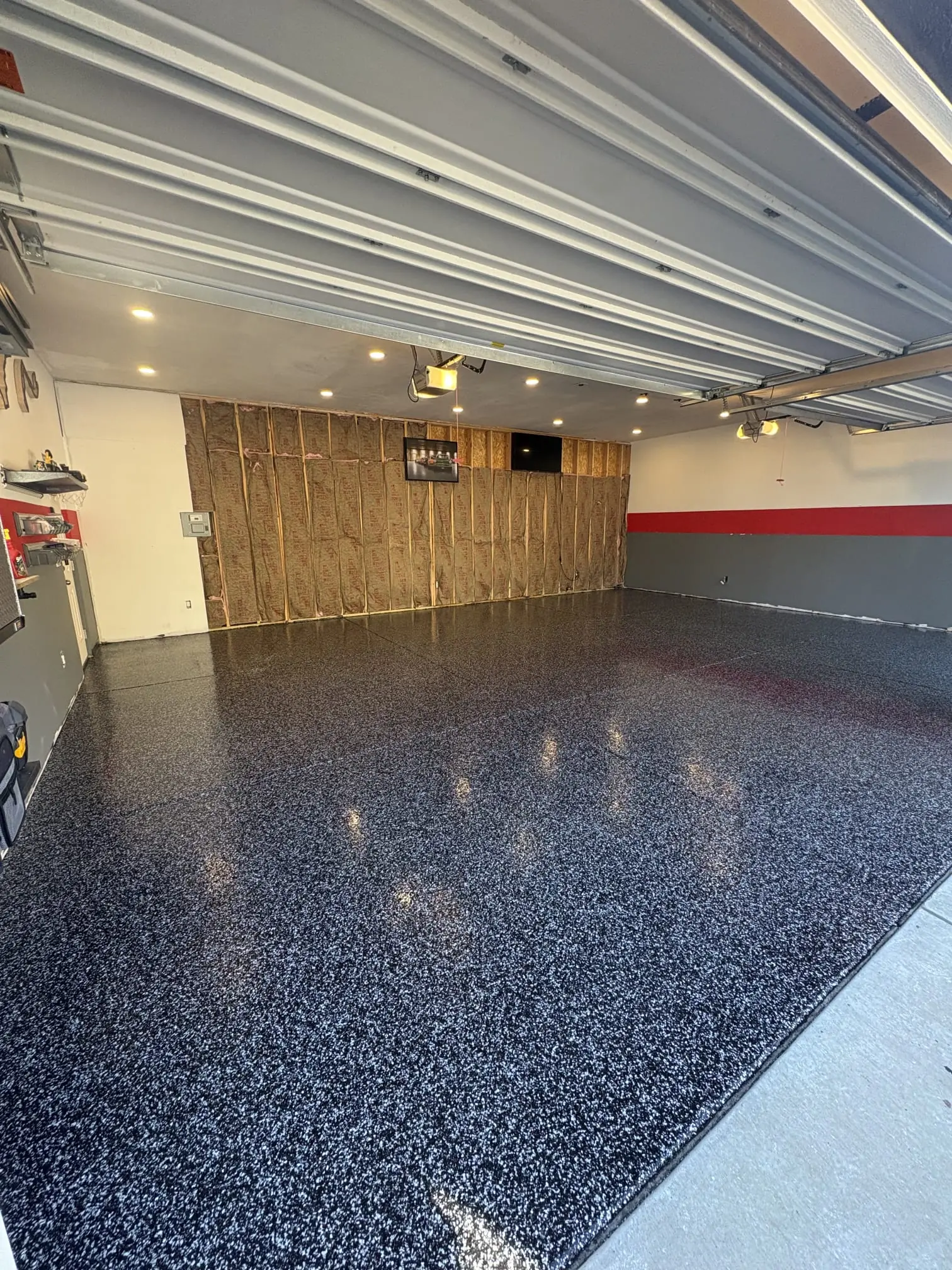
A detached garage that nobody heats sits frozen for a long stretch of the year, and its concrete keeps pushing moisture toward the surface the whole time. Coatings that peel after one winter almost always went down on a slab that was never ground, never tested, or never warm enough to cure. Grind to open concrete, test for moisture, match the primer to what the test shows, and hold a workable slab temperature through the cure.
What a long freeze does to a slab nobody heats
Evergreen sits at roughly 7,200 feet, and plenty of homes up here have a garage or shop standing apart from the house. Some have a small heater that runs now and then. Many have nothing at all.
That slab spends months cold. On a clear winter day one side of the building can sit in full sun while the other stays in shade, so the concrete warms near the door and stays frozen along the back wall. By evening the whole floor cools off again.
Concrete copes with those swings by itself. A coating bonded to the top has a harder job, because it has to stay attached while the slab under it expands, shrinks and moves moisture around. Snow melting off a truck adds water from above. Damp ground feeds it from below.
We see more coating trouble in these buildings than in attached garages, and nearly all of it traces back to decisions made on the first day of the job. None of that rules out a good floor in a cold garage. It means the prep and the install day matter more than the color chart does.
Vapor drive in plain terms
Concrete is porous. Water vapor travels through it, moving from the warmer, wetter side toward the colder, drier side. In a detached garage the ground under the slab is often the wetter side, so vapor keeps rising toward the surface all year.
Bare concrete lets that vapor escape into the air and nobody notices. Put a sealed film on top and the vapor meets a lid. When the bond is strong and the primer suits the slab, the floor handles it. When the bond is weak, pressure collects under the film and lifts it, often as small blisters that pop and flake.
Cold makes this worse in a sneaky way. A slab that feels dry at noon can sweat once the air warms faster than the concrete does, leaving a damp film exactly where the primer is supposed to grab.
This is why cold-slab moisture is the first thing we bring up on any mountain garage, well before anyone looks at chip samples. Picking a color for a slab that has not been tested is guessing, and a guess on a frozen floor tends to show itself by spring.
Testing the slab before anything gets mixed
Every garage starts with a diamond grind. Grinding removes the smooth, weak top layer along with old sealers and paint, and it opens the pores so primer can soak in. It also shows us what the concrete is really like once that surface skin is gone.
Then we test for moisture. A plastic sheet taped flat to the floor tells us whether the slab is pushing water up, and dark, damp concrete under the sheet is a warning sign. On slabs that look questionable we take meter readings across several spots, because a garage built into a slope can be dry at the door and damp at the uphill wall.
The readings choose the system. A dry slab takes a standard primer under the flake. A slab with more vapor coming through needs a primer made to hold that pressure back.
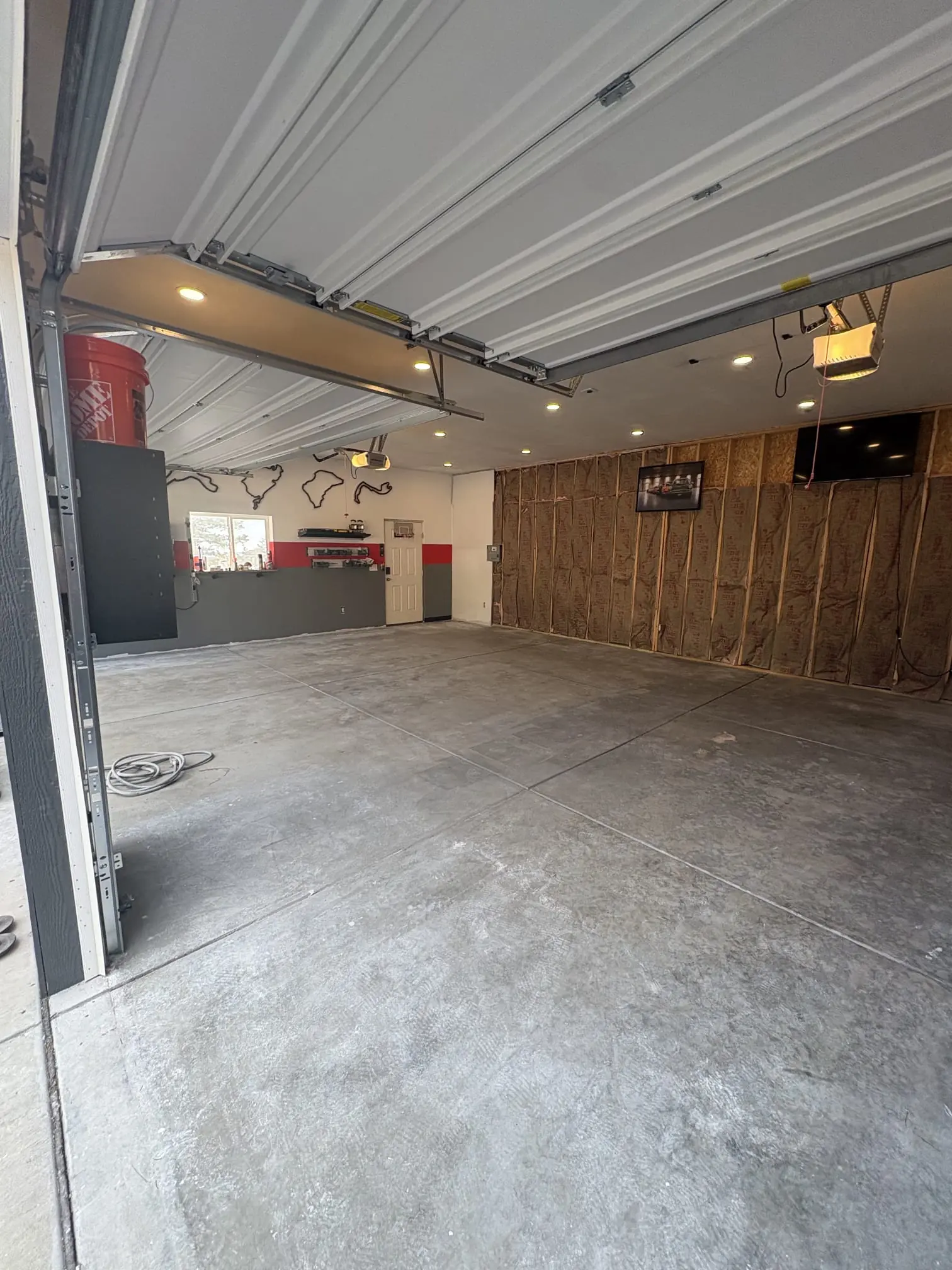
The photo below shows a garage before any of that work: bare gray concrete under insulated stud walls. It looks sound and clean, and it still gets ground and tested like every other floor we coat.
Cure temperature and the install window
Coatings harden through a chemical reaction, and cold slows that reaction down. The air reading is only part of the picture. What counts most is the temperature of the concrete itself, and in an unheated building the slab can run well below the air on a bright afternoon.
Too cold, and the resin stays soft longer, cures incompletely, or develops a waxy film that hurts adhesion between coats. We check the slab with a surface thermometer before mixing and keep checking through the day.
For a garage with no heat, that means choosing the install window with care. Late spring through early fall is the easy stretch. Outside of it, we can often bring the room and the slab up with temporary heat and hold them there through the cure, as long as that heat is dry and the space is vented. Propane heaters that dump moisture into the air create a second problem while solving the first.
Polyaspartic topcoats tolerate cooler conditions better than many epoxies, which gives us more room to work during the long freeze season. Our Evergreen polyaspartic coatings page explains that topcoat in more detail.
Why the first hard winter finds every shortcut
When a garage coating fails in the mountains, it usually fails during its first cold season, and the reasons repeat from job to job.
The most common is a slab that was only acid etched or scrubbed. Etching leaves a weak surface, and the film comes off with that surface. Next comes coating over old paint or sealer, which lets go and takes the new layer along. Then there is the job rushed onto a cold, damp slab on a gray afternoon because the calendar said so.
Joints and cracks are the other weak point. Leave a control joint open and meltwater settles in it, freezes overnight, and pries at the coating edge. We fill joints and cold-pour cracks with polyurea before any coating goes down, then grind the fill flush with the slab.
A floor built this way still gets snow, sand and magnesium chloride tracked across it every week. The difference is that it stays bonded to the concrete. Our Evergreen garage coatings page lays out the full system, and the flake epoxy page shows chip blends.
Cold garage questions
Can you coat a detached garage that never gets heated?
Yes. The slab has to be ground, tested for moisture, and matched to a primer that suits the readings. The install needs a window when the concrete itself is warm enough for the coating to cure, or temporary dry heat to hold it there. Once the floor has cured, it does not need a heated building to hold up through winter.
Do I need to leave heat running while the floor cures?
Only if the slab is cold on install day. We measure the concrete before mixing and tell you whether temporary heat is needed and for how long. Most owners never run anything afterward. What matters is keeping the room steady through the cure, without open propane heaters that put extra moisture into the air.
Why did the old coating on my garage floor peel after one winter?
Usually the slab was etched or only cleaned instead of ground, or the product went over old paint or a damp surface. Vapor pushing up from below and meltwater freezing in open joints then lifted the weak spots. We grind all of that off, fill the joints and cracks, and start again on clean, open concrete.
Cold Garage, Bare Slab?
We make the drive up from Parker, test the concrete, and tell you which system that slab can actually carry.
Call (720) 635-0282 Request a Free LookEvergreen Garage Coatings · See garage floors · Evergreen services · Request a free look