
A basement slab sits in the ground, so it can carry moisture up from below in ways a garage slab rarely does. Water vapor pushing through concrete is one of the main reasons a basement coating lifts or blisters. Before a gym, theater or guest suite floor goes down, we test the slab, read the results, and choose a primer and system to match. Sometimes that means a vapor-tolerant primer, and sometimes it means waiting.
Why a basement slab behaves differently
A garage slab sits mostly above grade, with air on one side and gravel under it. A basement slab is surrounded by soil. Ground moisture moves up through the concrete as vapor, slowly and constantly, and it does not care whether the room above has carpet, tile or nothing at all.
Under carpet that vapor mostly escapes through the fibers and nobody notices. Put a sealed coating on the slab and the vapor has nowhere to go. If enough of it builds up under the film, it pushes. Blisters, soft spots and peeling patches come from exactly that, sometimes a full season after an install that looked perfect on day one.
Lone Tree basements finish into home gyms, theaters and guest suites, and each of those rooms is a real hassle to empty out once it is furnished. That makes the first floor the one that has to work. So before anyone picks a metallic color or a flake blend, the slab gets tested. It is the least exciting part of a basement floor and the part that decides whether it lasts.
How we test the slab
We use more than one method, because each one tells us something different.
The simplest is a plastic sheet taped tight to the bare concrete and left alone for a while. If the underside fogs, or the concrete under it darkens, moisture is coming up. It is a quick check that catches the obvious cases.
A moisture meter gives readings across the whole floor. We take them in several spots, near the walls and out in the middle, because moisture is rarely even. Corners near a downspout or a window well often read higher than the center of the room.
The numbers that actually set the primer come from two formal tests: a calcium chloride test, which measures how much vapor the slab is giving off, and a relative humidity probe set into the concrete itself. The sheet and the meter tell us where to look. Those two readings decide what goes down first.
We also look for clues the slab leaves on its own. A white, powdery residue on the surface, called efflorescence, is salt carried up by water and left behind when it dried. Dark rings around old furniture feet, a musty smell, or rust on metal shelving legs all point the same way. Old paint or sealer that peels off in sheets is another strong hint, since it often failed for this very reason.
What the results change
A dry slab gets our standard build: diamond grinding, crack repair, primer, base coat and finish. Grinding matters even more below grade than in a garage, because it opens the surface so the primer can soak in and grip instead of resting on top.
A slab showing moderate moisture gets a different primer. Vapor-tolerant primers are made to bond to damp concrete and slow vapor down before it reaches the decorative layers. They add a step and change the schedule, and on plenty of basements they are the right call.
A slab with real water coming in is a different conversation. If water is entering through a crack or along a wall, no coating will fix it, and we will tell you that plainly. That situation needs drainage or waterproofing work first, and we come back once the slab has dried out. Pushing ahead anyway would only put a nice floor over a problem you would be tearing out later. The systems we install once a slab checks out are listed on our Lone Tree basement floor coatings page.
Prepping a room that already has walls
Many basements we see are partly or fully finished before the floor is done. Drywall is up, trim may be on, a TV is mounted, and sometimes the furniture is waiting in the next room. Prep in that setting is mostly about protecting what is already there.
We mask the walls with tape and paper, a strip tall enough to catch splatter during grinding and rolling. Our diamond grinders connect to dust collection, which keeps the fine powder out of the air and off fresh paint. Doorways to the rest of the house get sealed off.
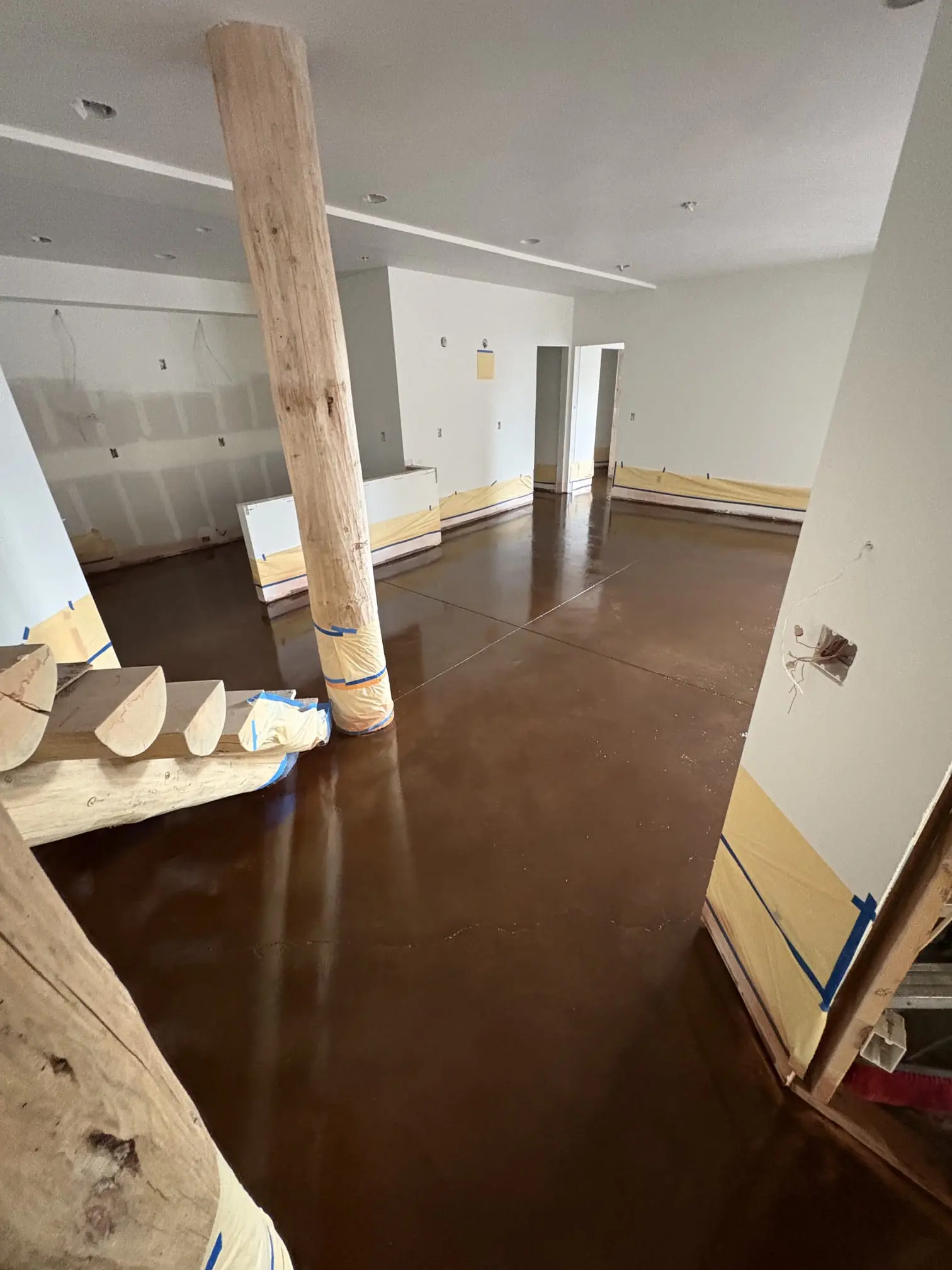
Structural posts, columns and stair stringers get coated around carefully by hand. In the lower level pictured below, a glossy brown floor runs around a peeled log post with the walls masked in tape and paper, the kind of detail that shows when it is rushed. Egress window wells deserve a look during prep as well. They bring in great light, and they are also a common place for water to get in, which is one more reason the meter readings near them matter.
Picking the floor for the room
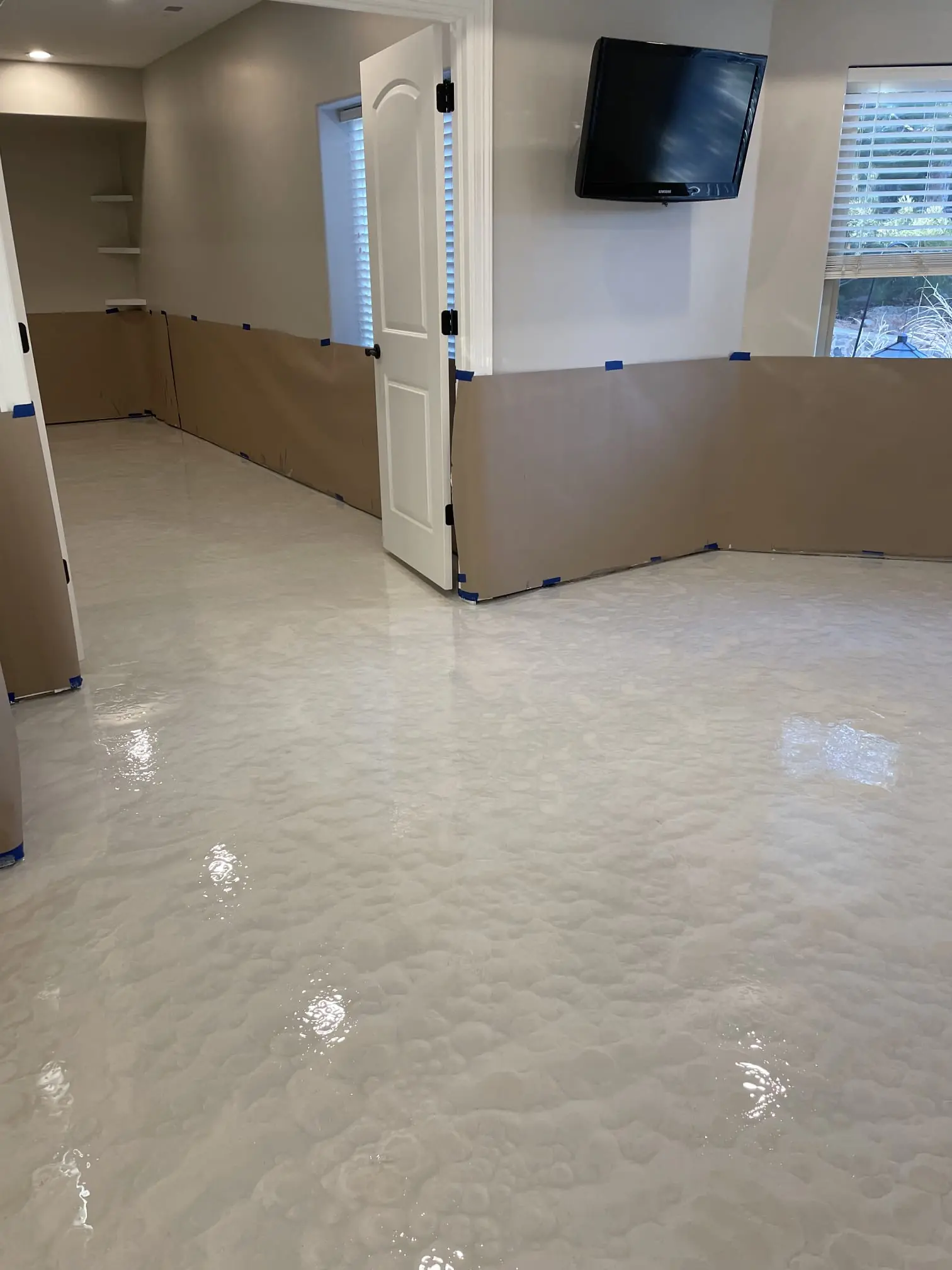
Once the slab passes, the room decides the system. A theater or TV room is about how the floor looks with the lights low. A light pearl metallic reflects the screen glow and makes a basement feel brighter during the day. The photo at the top of this post shows that kind of floor below a mounted TV, with the walls still masked from the install.
A home gym needs a dense, sealed floor that shrugs off dropped dumbbells and wipes clean, with enough texture that sweat does not make it slick. Our anti-slip coatings page explains how that grip gets added.
Guest suites and rec rooms sit somewhere in between. A flake blend or a quieter solid color fits there, and both handle kids, pets and spilled drinks. Whatever the room, cleanup is a mop and warm water instead of a carpet shampooer. We bring samples down to the basement itself so you see them under your own lights, since basement lighting changes how every color reads.
Basement floor questions
What happens if the moisture test fails?
It depends on how much moisture shows up. Moderate readings usually mean a vapor-tolerant primer under the system, which adds a step but lets the job go ahead. Active water coming through a crack or along a wall means the floor waits until drainage or waterproofing is handled, because no coating can hold back running water.
Can you coat a basement that already has drywall and trim?
Yes. We mask the walls with tape and paper, seal off doorways, and run grinders with dust collection so the fine powder stays out of the air. Trim can stay on in most rooms. Posts, columns and stair stringers get coated around by hand, which takes longer but leaves clean edges where the floor meets them.
Will a coated basement floor feel cold underfoot?
About as cold as the bare slab feels now. A coating is thin, so it does not add warmth or take any away. Many people put area rugs in the theater or guest suite and leave the gym bare. Rugs sit fine on a cured floor, and the coated floor under them stays easy to clean.
If you are planning a basement finish, call before the drywall goes up if you can. Testing and grinding are easier in an open room, and the results shape the rest of the plan, though we work in finished rooms all the time.
Finishing the Basement This Year?
We test the slab first, then bring samples down to see under your own lights.
Call (720) 635-0282 Request a Free LookLone Tree Basement Coatings · See finished floors · Lone Tree services · Request a free look