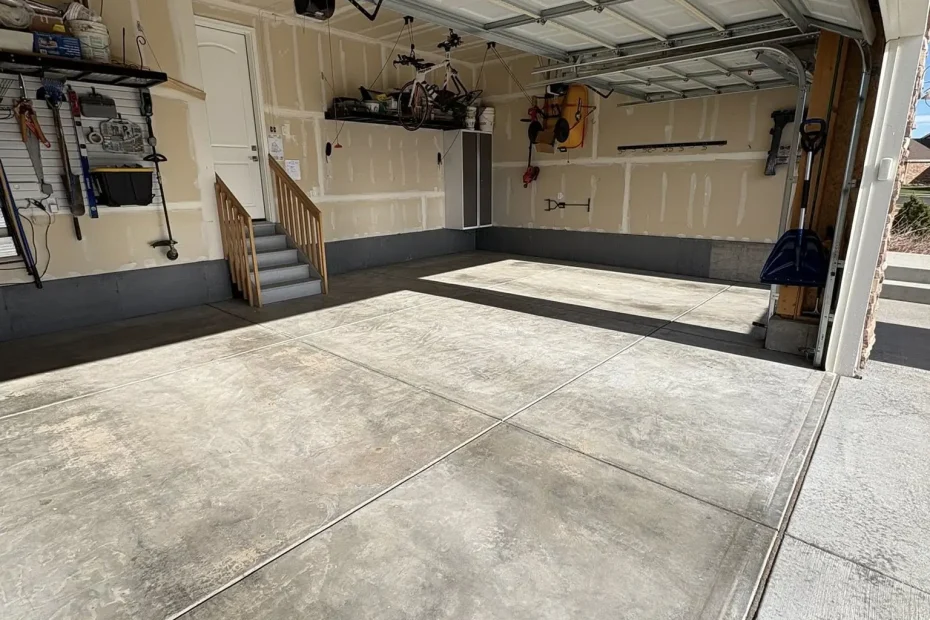
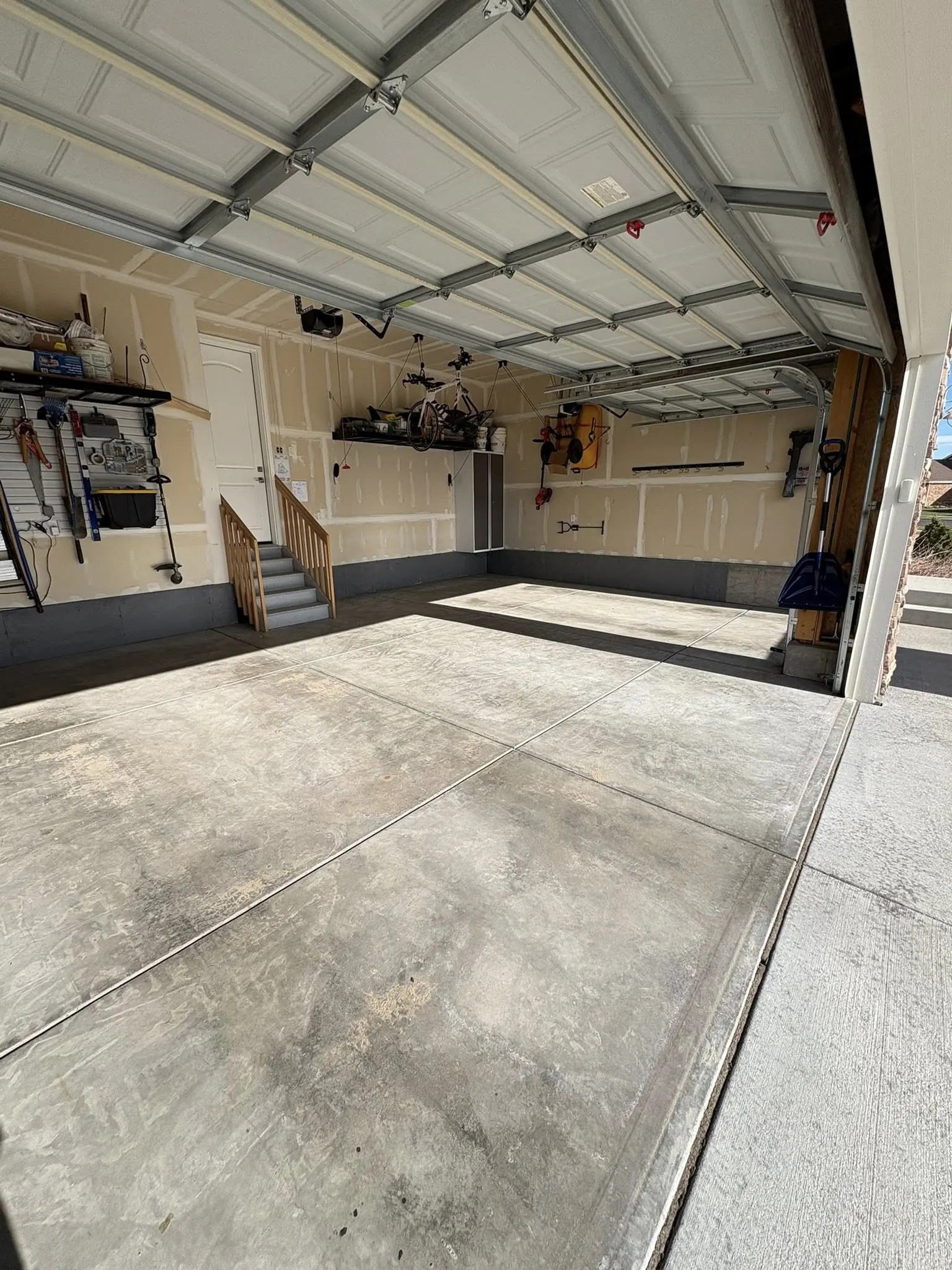
Flake epoxy is the better Castle Rock choice for garages, basements, and workshops where minor concrete imperfections need hiding and a softer foot-feel matters. Polished concrete, which can come in slightly lower per square foot, wins for industrial spaces, large open floors, and projects where exposed concrete fits the design intent.
Visual Comparison
Flake epoxy: textured, opaque, color-rich. Hides concrete imperfections. Reads finished and intentional. Available in dozens of color blends.
Polished concrete: smooth, semi-gloss, exposed aggregate visible. Concrete-natural look. Color comes from dye if added. Reads industrial, modern, or minimalist depending on context.
Durability Comparison
Both are durable when properly installed. Flake epoxy with polyaspartic topcoat lasts 15 to 25 years residential, 10 to 20 commercial. Polished concrete (densified and sealed) lasts 10 to 20 years before re-polishing is needed.
Damage modes differ: flake epoxy can chip if heavy impact tools dropped (rare in residential, possible in industrial). Polished concrete can stain if untreated for liquid spills. Both repair cleanly with the right techniques.
Cost Comparison
Flake epoxy is priced per square foot installed for residential garages and basements. Commercial scales similar. Polished concrete runs slightly less expensive per square foot but stays in a similar range, with the low and high ends overlapping.
Cost driver differences: flake epoxy is materials-heavy (epoxy, flake, polyaspartic). Polished concrete is labor-heavy (multiple grind, polish, and seal passes). Big floors favor concrete polish (labor amortizes); small floors favor epoxy (material cost is fixed).
Maintenance Differences
Flake epoxy: sweep, dust mop, wet-mop with mild soap. No annual maintenance required. Refresh topcoat at 10 to 15 years extends life.
Polished concrete: similar daily care plus annual re-burnishing on commercial floors to maintain shine. Sealer may need refresh every 3 to 5 years on heavy-traffic commercial. Residential less.
How to Choose
Flake epoxy: garage floors (95 percent of Castle Rock garages should be flake or metallic), basement workshops, finished basement living spaces, gyms, restaurants with traffic.
Polished concrete: large open warehouse floors, industrial showrooms wanting concrete aesthetic, modern minimalist homes with concrete-floor design intent, retail spaces with industrial-modern decor.
Castle Rock Epoxy Flooring FAQ
Can I have both, polished concrete in some rooms and flake epoxy in others?
Yes. Many Castle Rock projects mix both. Garage gets flake; basement great-room gets polished concrete; workshop gets flake.
Which is more slippery when wet?
Both are similarly slippery without slip additives. Flake epoxy with aluminum-oxide grit is slip-resistant. Polished concrete with grit-additive sealer is slip-resistant.
Does polished concrete work in a basement?
Yes if the slab is in good condition. Cracks and stains are exposed by polishing where flake epoxy hides them.
How long does each take to install?
Flake epoxy: 1 to 2 days for most residential. Polished concrete: 2 to 4 days due to multiple grind-and-polish passes.
Can I get both quoted on the same project?
Yes. We quote both options on most Castle Rock projects. Decision is usually visual preference and budget.
Need Castle Rock Flake Epoxy?
10+ years of epoxy experience across Castle Rock and the Parker area.
Free Estimate (720) 635-0282Read our full Castle Rock Flake Epoxy page · More posts · Get a free estimate